The 10 Pokémon Cards With the Most Aura
Aura is not rarity and it is not price. Ten cards that make a Pokémon feel too big for the frame, and the three tricks they use to do it.
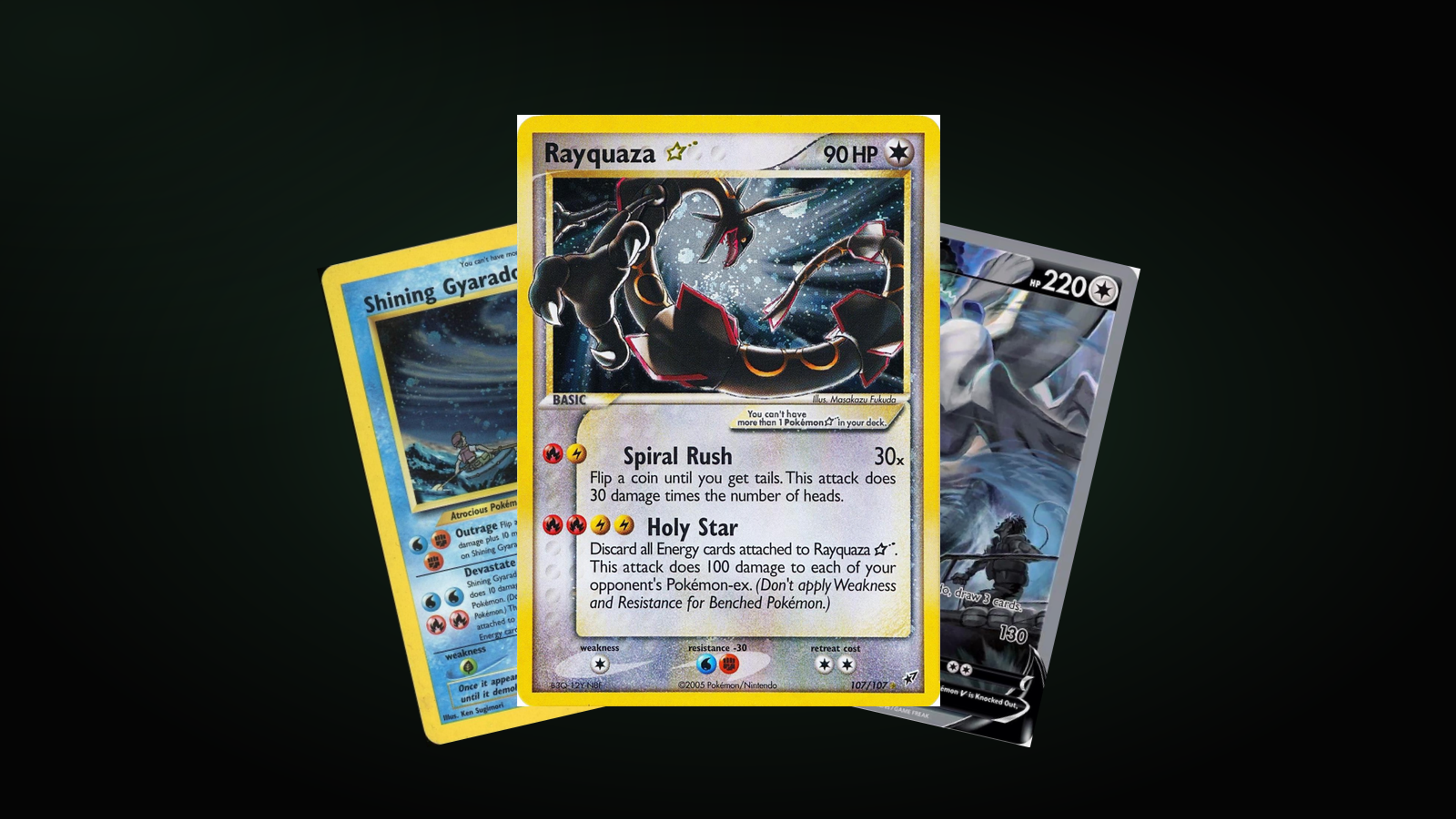
Aura is the feeling that a Pokémon is bigger than the card it is printed on. It has nothing to do with rarity or price: the card at number three is one of the cheapest on this list in raw condition, and it outranks cards that cost many times more.
Ten cards, counting down to a Gold Star at number one. Read them in order and three tricks keep coming back: a small human for scale, flavour text that warns you off, and darkness.
10. Mewtwo, SVP 052 promo
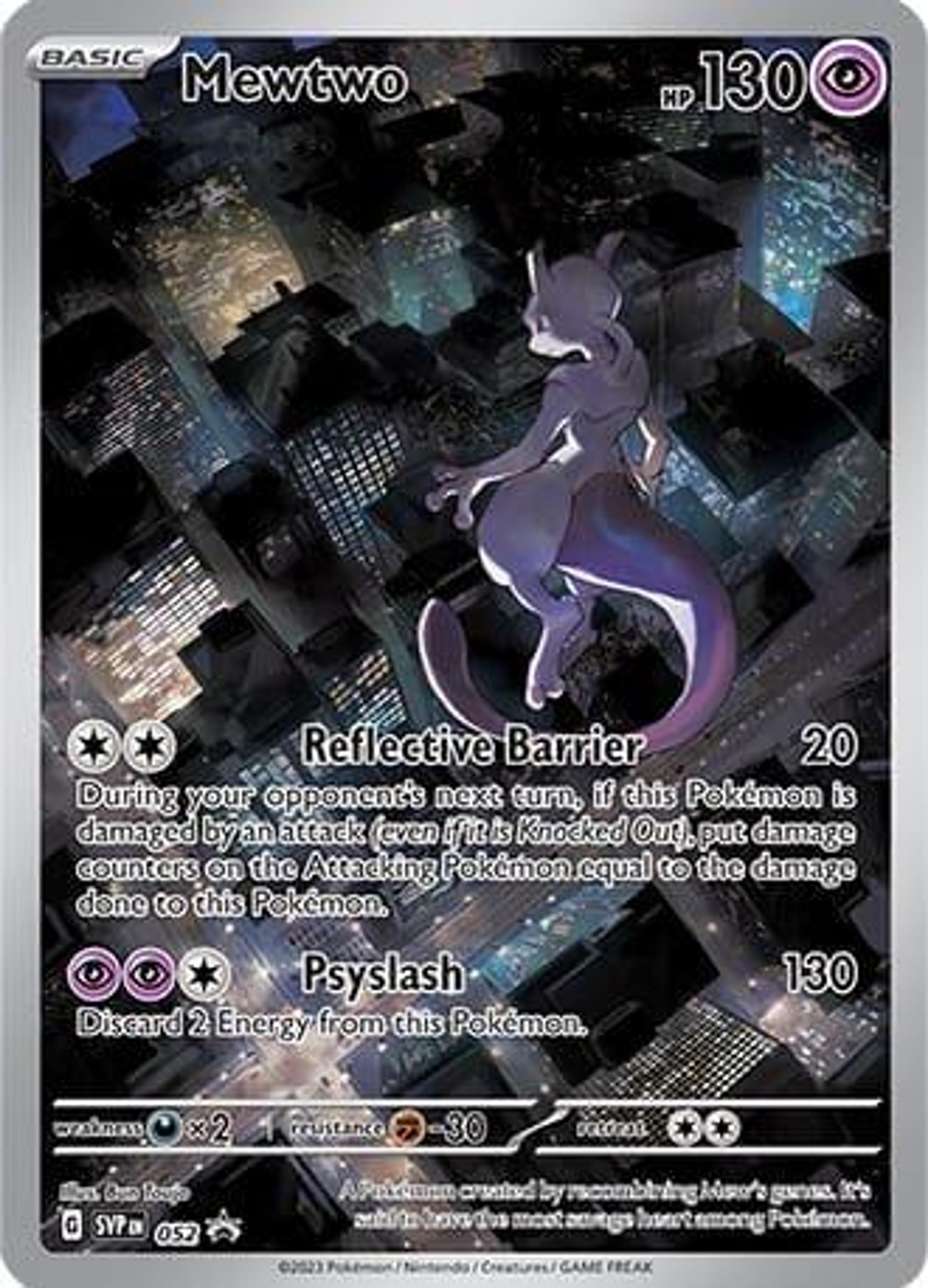
Mewtwo hangs above a city at night, drawn from so high up that the towers look like a circuit board. Nobody behind those windows knows he is there.
The flavour text finishes the job: a Pokémon created by recombining Mew's genes, said to have the most savage heart among Pokémon.
9. Dark Charizard, Team Rocket
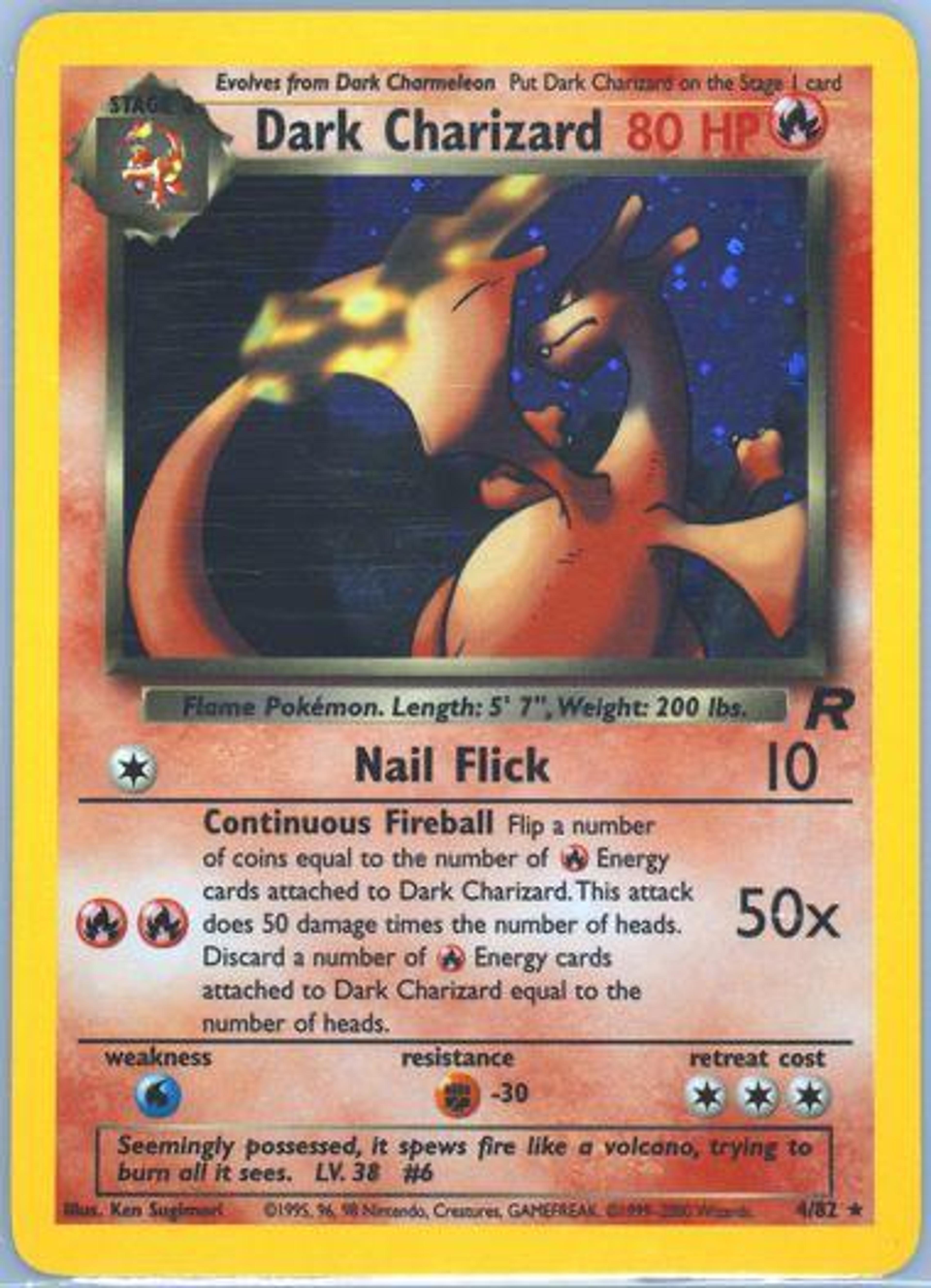
Ken Sugimori designed Charizard, and for the Team Rocket set he drew it as something that had gone wrong. The flavour text says it plainly: seemingly possessed, it spews fire like a volcano, trying to burn all it sees.
The set turned familiar Pokémon into the villains' versions of themselves, and this is the one that sold the idea.
8. Lugia V, alternate art
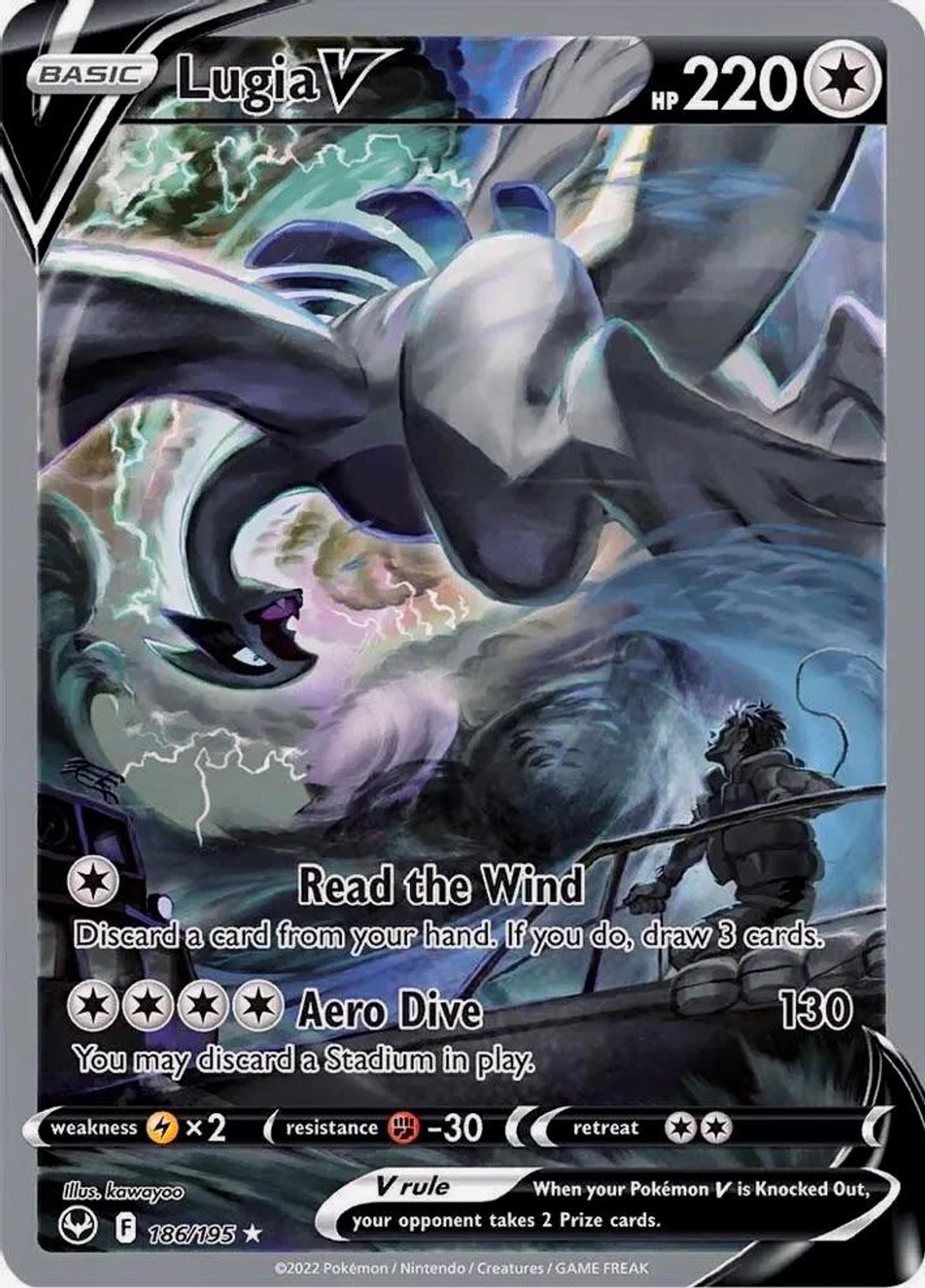
kawayoo put a sailor on the deck of a ship and Lugia in the storm above him, close enough to fill the sky. The man is tiny, braced against the railing, looking up.
That is the first trick of aura, and the most reliable one: give the Pokémon a human to tower over.
7. Shining Gyarados
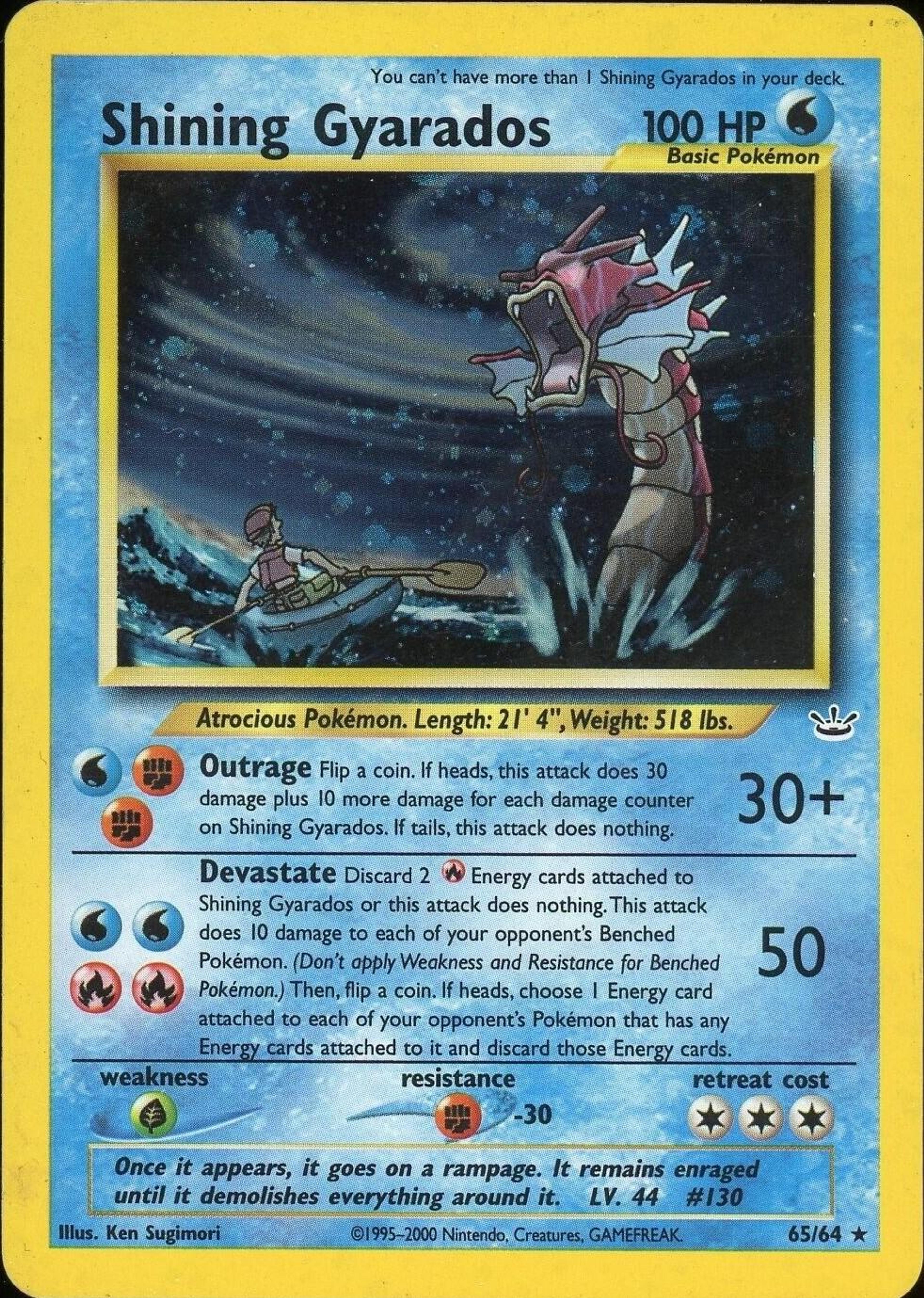
The same trick, twenty years earlier. A red Gyarados rears out of a churning sea while someone in a kayak paddles right past it, drawn with their back to us so you see what they see.
The card is numbered 65 in a set of 64, printed past the last numbered slot. Its top line carries a rule most cards never need: you can't have more than 1 Shining Gyarados in your deck. The game itself treats it as too much.
6. Lugia, Neo Genesis
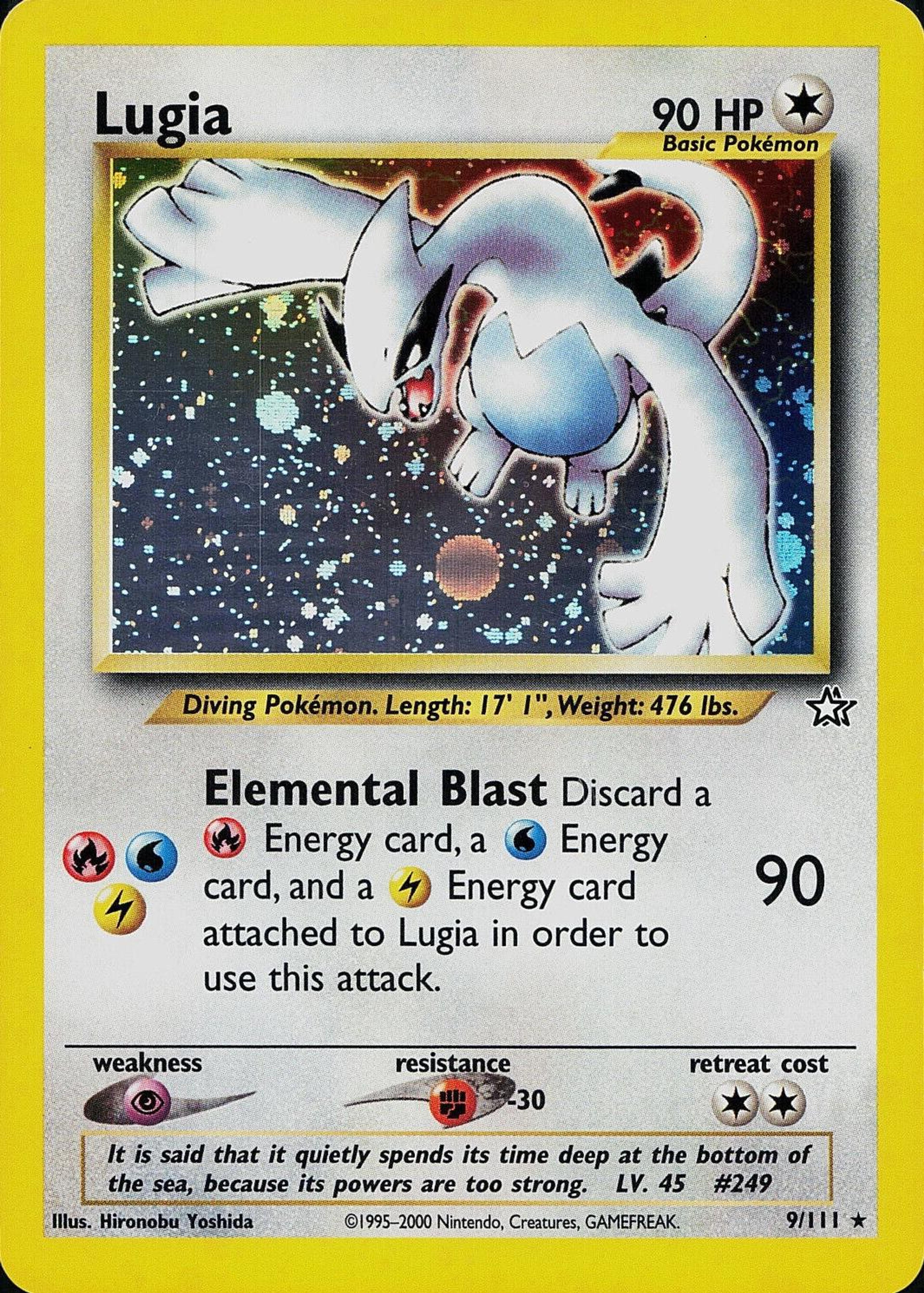
No human here, and no storm. Hironobu Yoshida's Lugia fills the window, and the flavour text supplies the rest: it is said to quietly spend its time deep at the bottom of the sea, because its powers are too strong.
A Pokémon that hides for everyone else's sake is the second trick. The card warns you.
Own any of these? See what your cards are worth with Stakd.
5. Team Rocket's Mewtwo ex
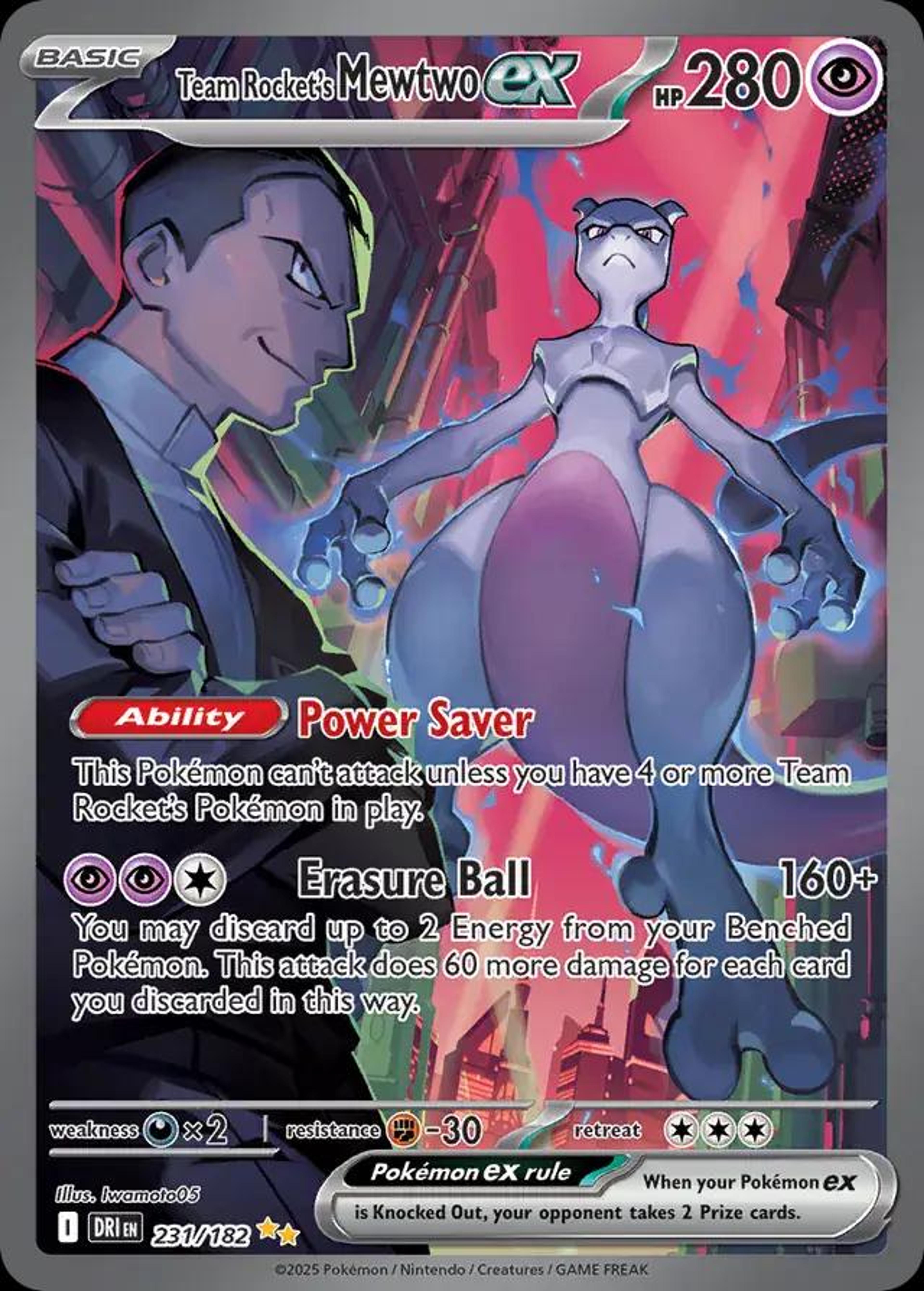
Here the human is not there for scale, he is the threat. Giovanni smiles in the foreground and Mewtwo floats behind him, arms loose, looking down at you.
Its ability, Power Saver, stops it from attacking at all unless you have 4 or more Team Rocket's Pokémon in play. Even the rules make it wait for permission.
4. Sabrina's Gengar
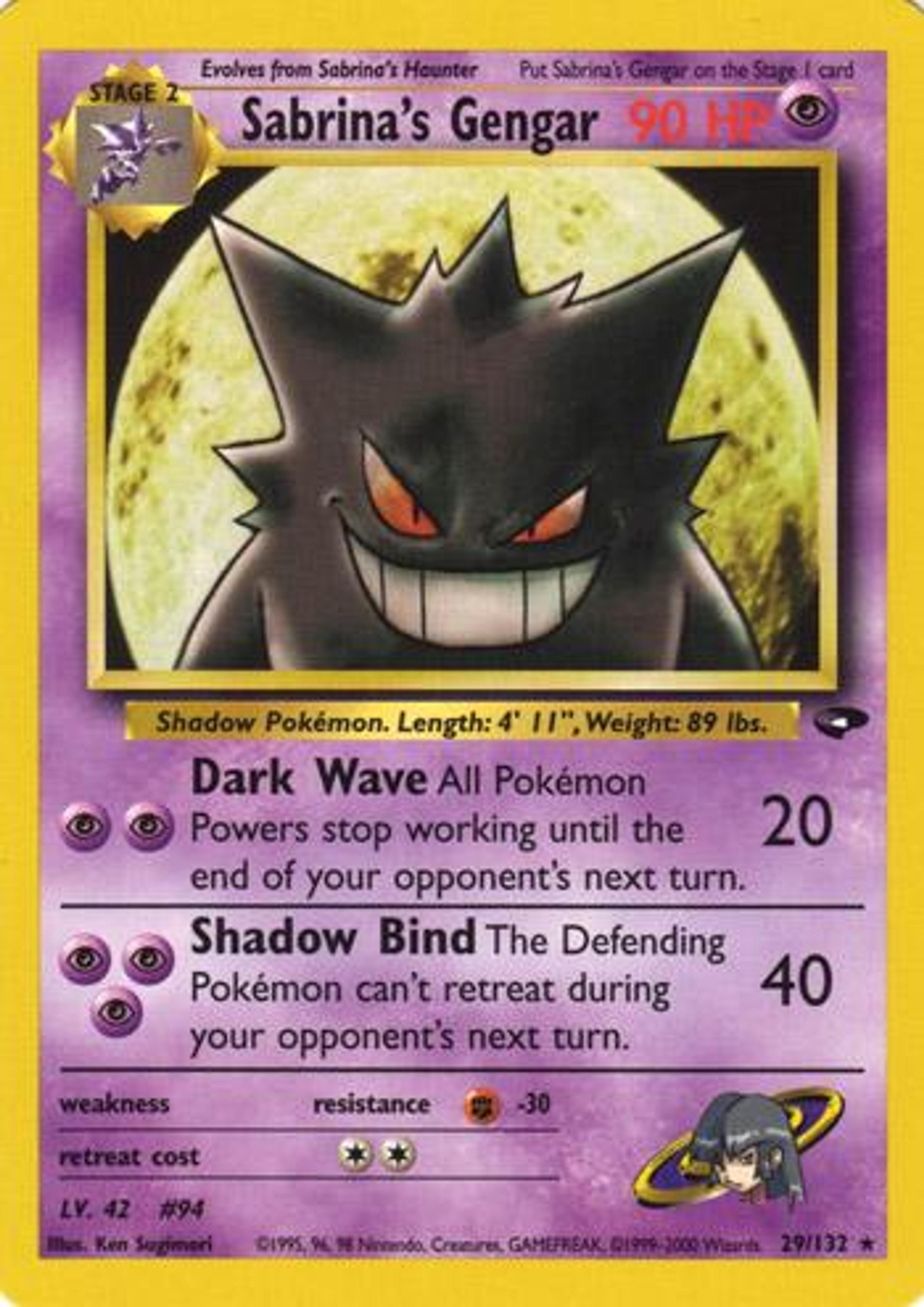
Ken Sugimori again, and the simplest composition on the list: a full moon and a grin. Its first attack, Dark Wave, switches off every Pokémon Power in play. The second, Shadow Bind, stops your Pokémon from retreating.
Another print of the same card, the 14/132 holo, sits at the top of our ranking of the most iconic Gengar cards.
3. Dark Marowak
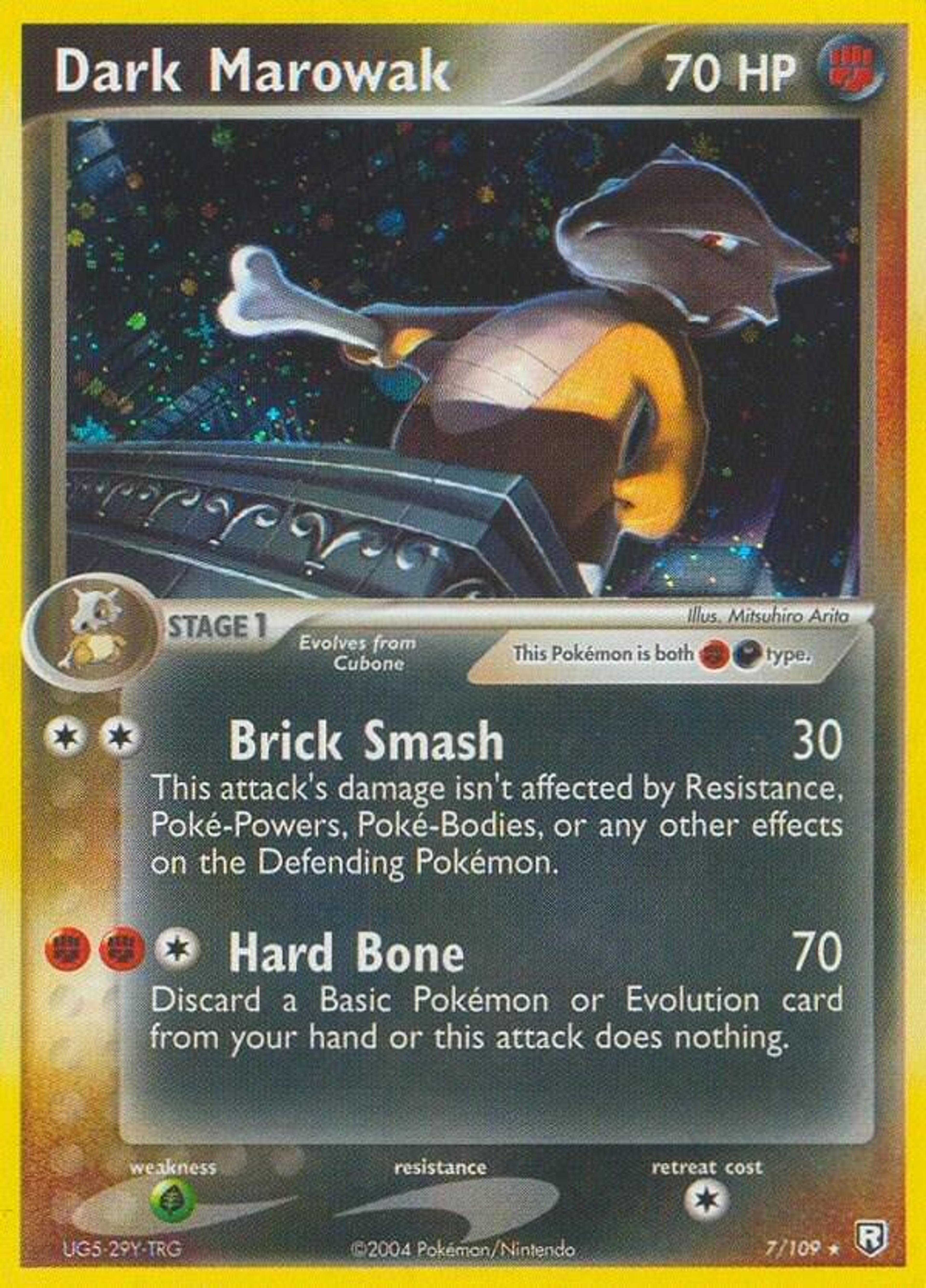
The surprise of the list. Mitsuhiro Arita drew Marowak with its bone raised and one red eye catching the light, on a dark holo ground. The card even spells out that it is both Fighting and Darkness type.
That is the third trick: darkness. Not a black background, but a Pokémon that looks like it is waiting for you to make a mistake.
2. Alakazam, Base Set
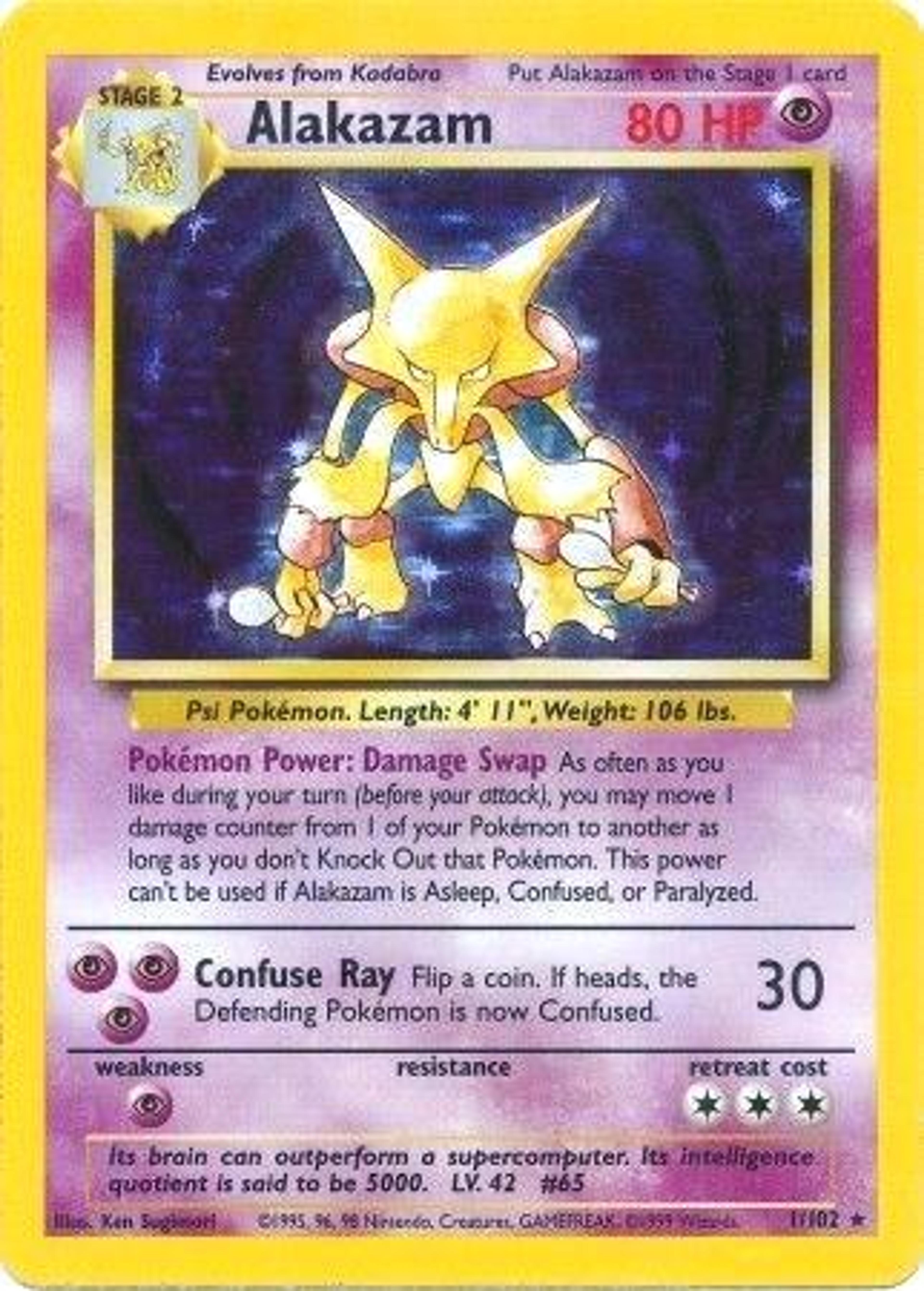
Card number 1 of the first set. Ken Sugimori's Alakazam glows against a purple starfield, and the flavour text makes a claim no stat could: its brain can outperform a supercomputer, and its intelligence quotient is said to be 5000.
Its Pokémon Power, Damage Swap, lets you move damage between your own Pokémon. Aura, here, is a mind you cannot outplay.
1. Rayquaza Gold Star
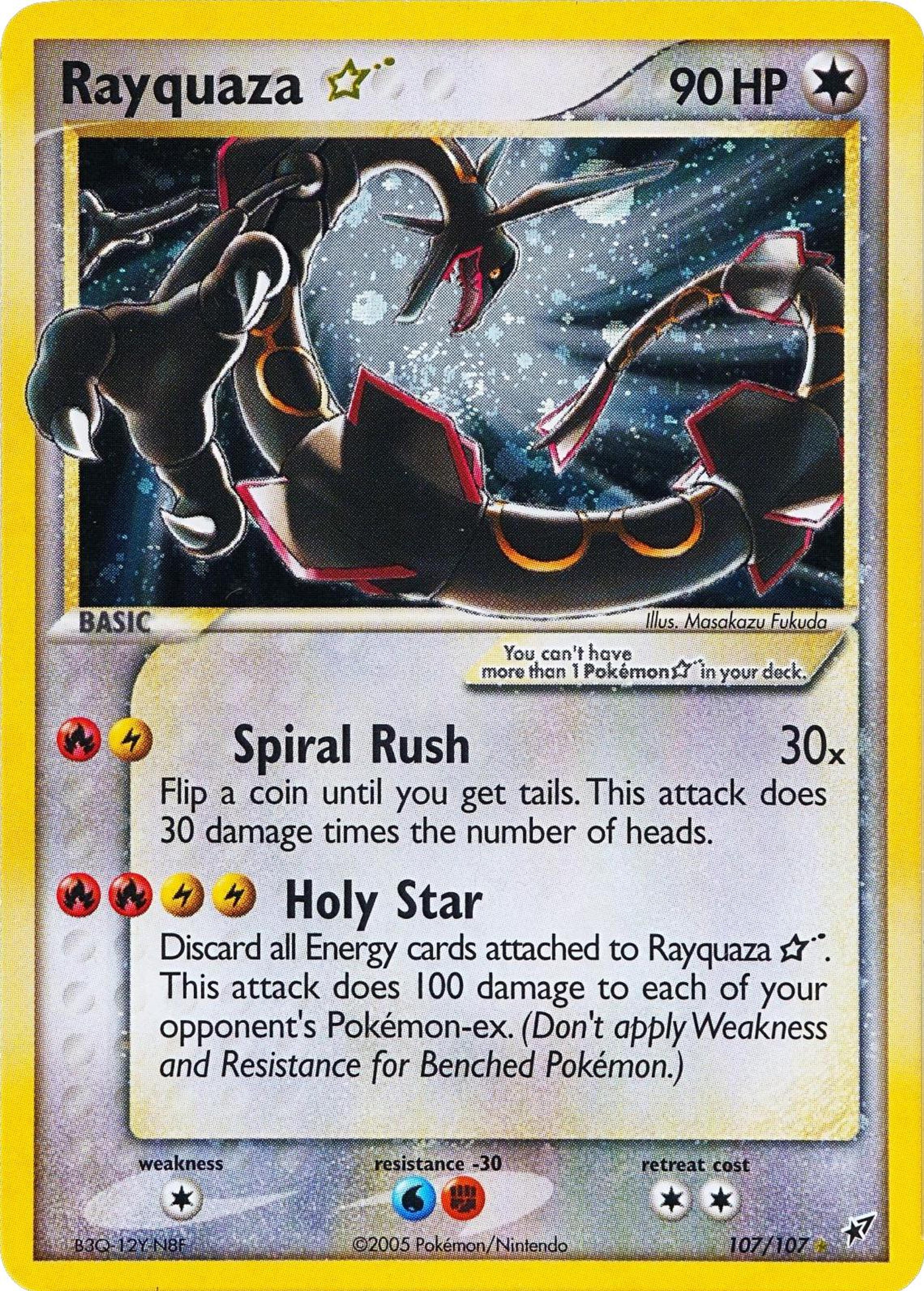
A black Rayquaza, the shiny colouring, coiled through a dark sky so that its body runs off every edge of the frame. Masakazu Fukuda drew it too big for the card, and that is the whole effect.
The star after its name marks a Gold Star, and like Shining Gyarados it carries a deck rule: you can't have more than 1 Pokémon ☆ in your deck. Its second attack, Holy Star, discards all its Energy to hit each of your opponent's Pokémon-ex for 100. Darkness, scale and a rule that says the game cannot handle two of them, all on one card.
Aura is three tricks, not a rarity
Line the ten up and the same three devices do the work. Scale: a sailor, a kayaker, a city seen from above. Warning: flavour text that calls the Pokémon too strong, possessed, savage or smarter than a supercomputer. Darkness: night skies, a black shiny, the villains' versions of the Team Rocket sets.
Four of the ten were drawn by Ken Sugimori, who designed the original Pokémon in the first place. Two of them carry a rule limiting you to one copy per deck, which means the people who made the game felt it too.
“Rarity is how many were printed. Aura is how small the card makes you feel.”
For the cards that win on beauty rather than menace, see the most amazing Pokémon cards ever printed.
Aura does not set a price, but collectors pay for it anyway. Stakd shows what every card in your binder is worth today, the quiet ones and the menacing ones.
Track what your collection is really worth
Stakd turns your cards, Funko Pops and LEGO sets into a valued portfolio, with AI grading, live market prices and profit tracking.
Keep reading
Card art & culture
The 15 Goofiest Pokémon Cards of All Time
Fifteen cards that gave up on looking powerful. The same artist keeps appearing, and so do the same three Pokémon families.
· 4 min read
Card art & culture
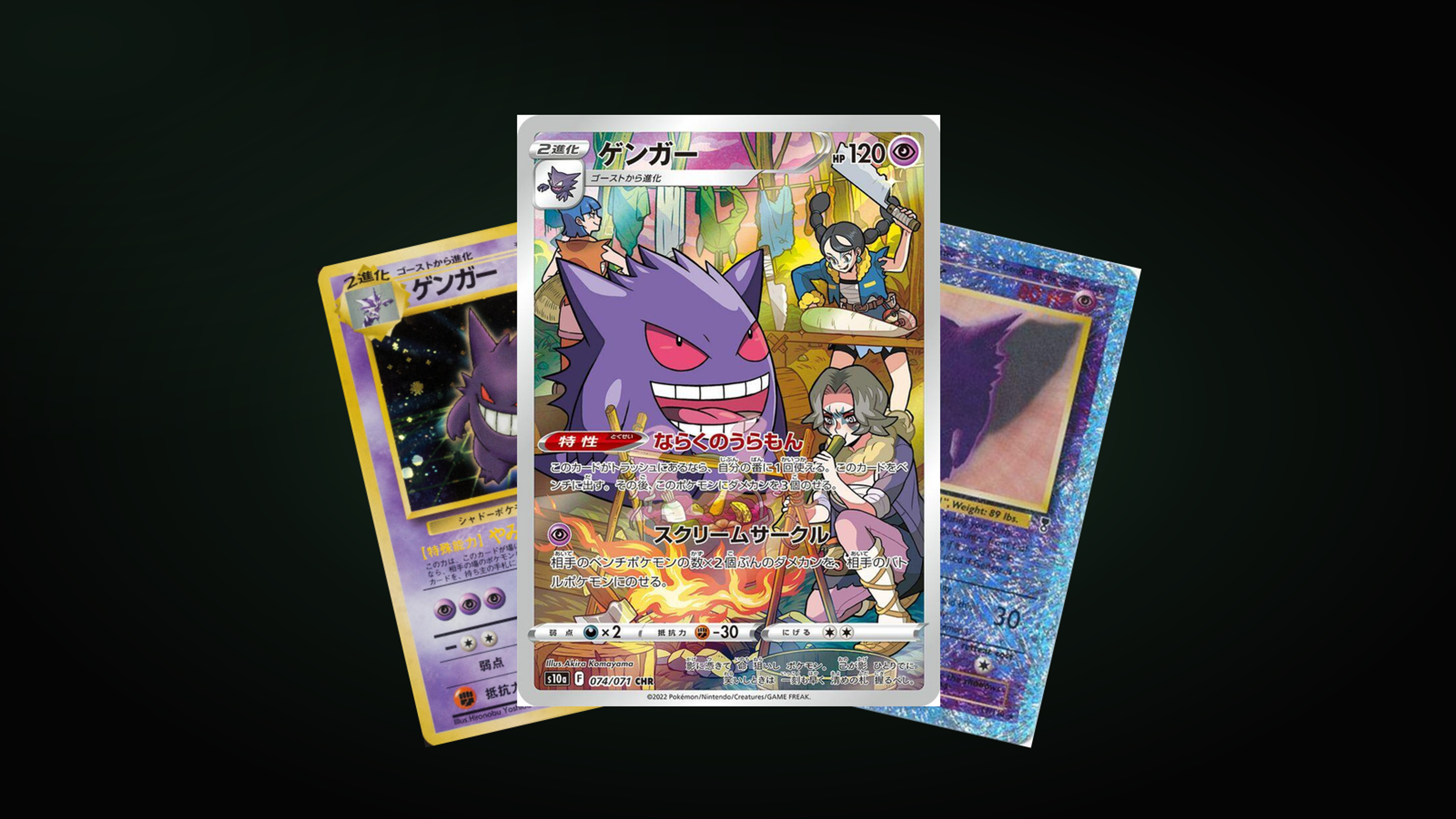
The 10 Most Iconic Gengar Cards of All Time
Thirty years of Gengar, from a Gym-era Sugimori classic to a 2026 Mega, and what each card says about the era that printed it.
· 3 min read
Card art & culture
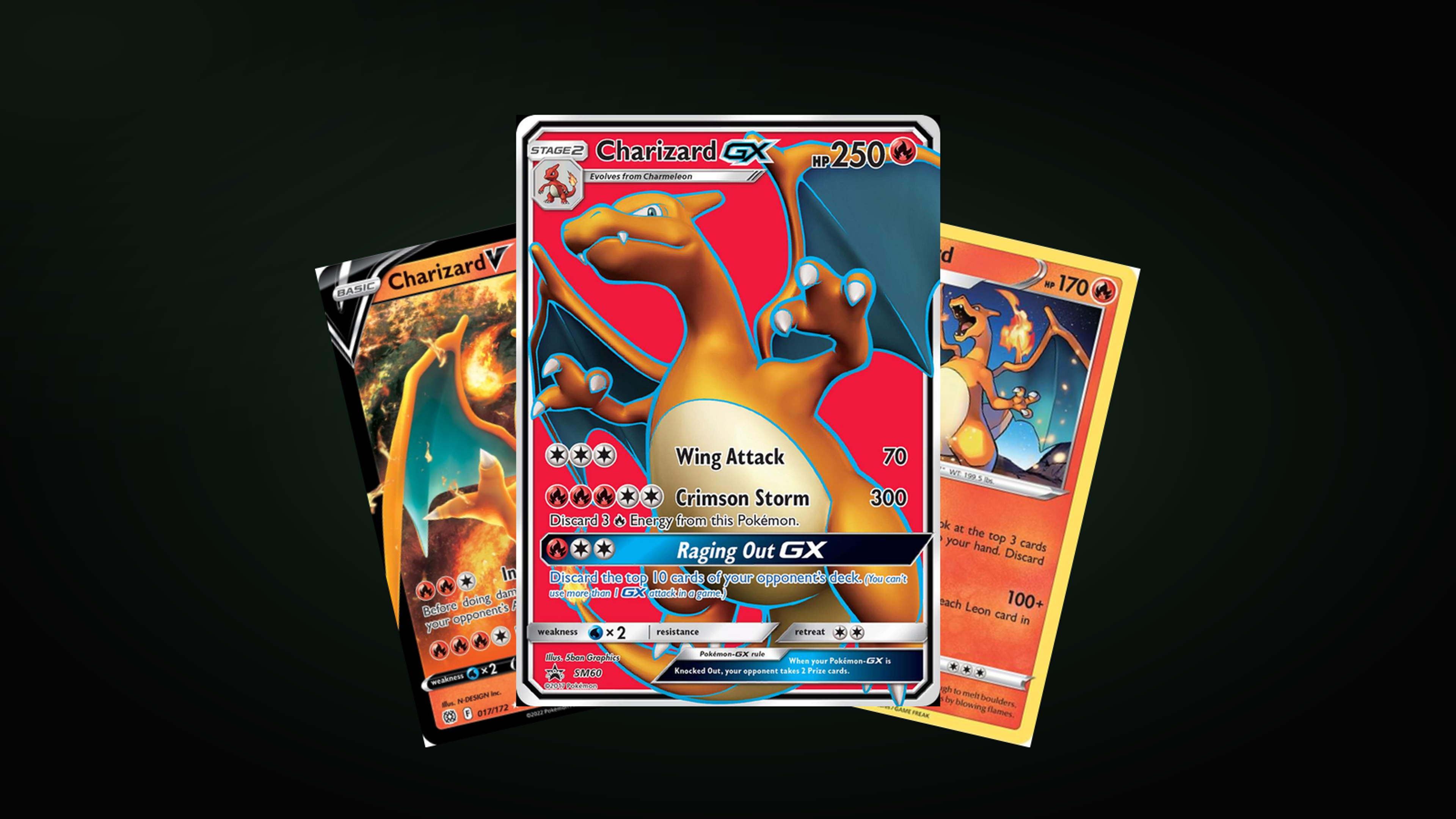
The 10 Ugliest Charizard Cards of All Time
Charizard sells whatever is printed on it, which is exactly why some of the art is this bad. Ten misses, and the house decisions behind them.
· 3 min read