The 10 Most Iconic Gengar Cards of All Time
Thirty years of Gengar, from a Gym-era Sugimori classic to a 2026 Mega, and what each card says about the era that printed it.
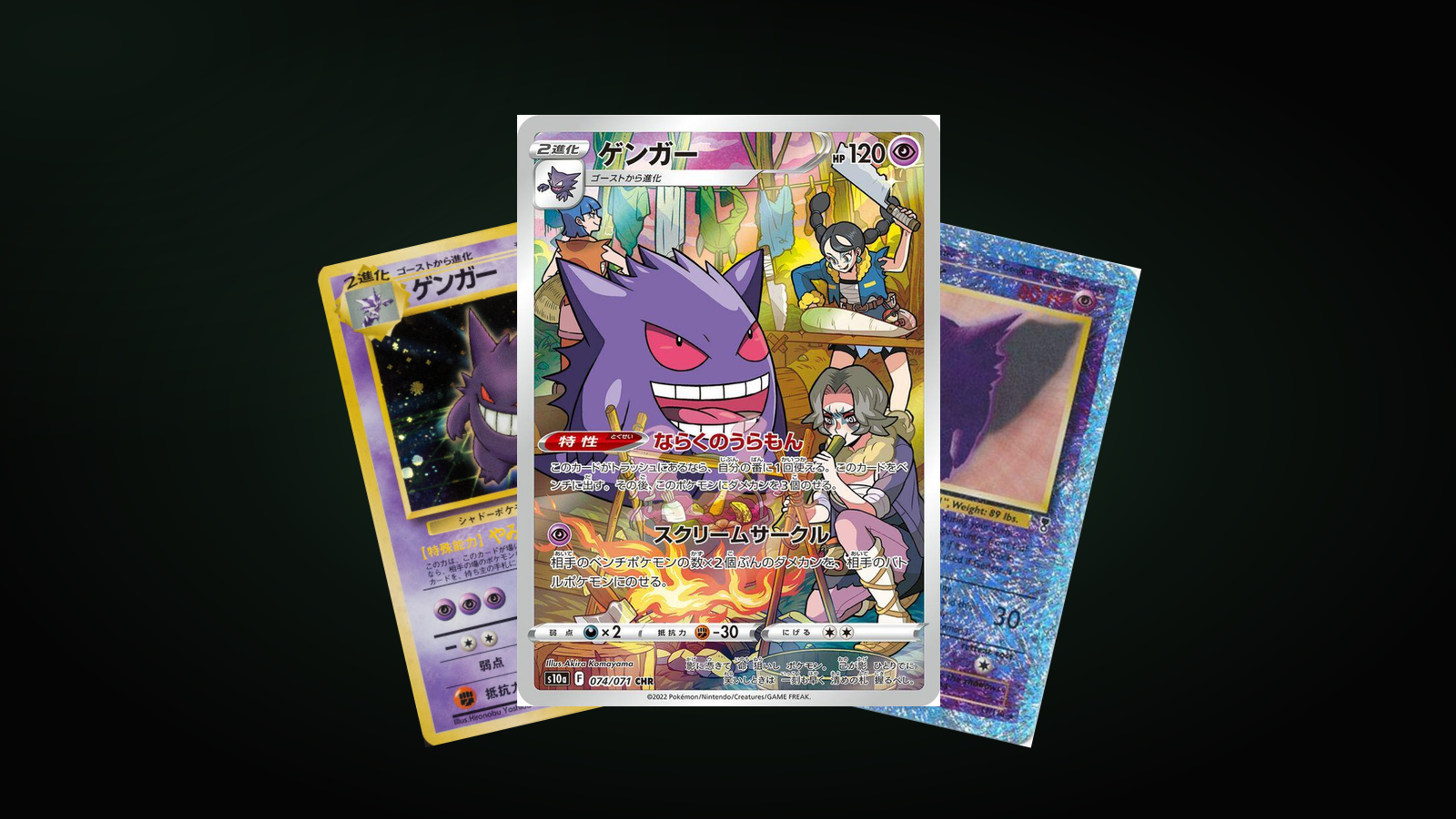
Gengar has been printed for close to thirty years, and almost every era of the card game left its mark on him. That is what makes a Gengar list worth making: you are not ranking ten cards, you are watching the whole hobby change shape around one Pokémon.
Ten cards, counting down from a 2022 Japanese character rare to the 1990s Gym-era classic at number one, and what each one tells you about the moment it came from.
10. Gengar, 2022 Japanese character rare
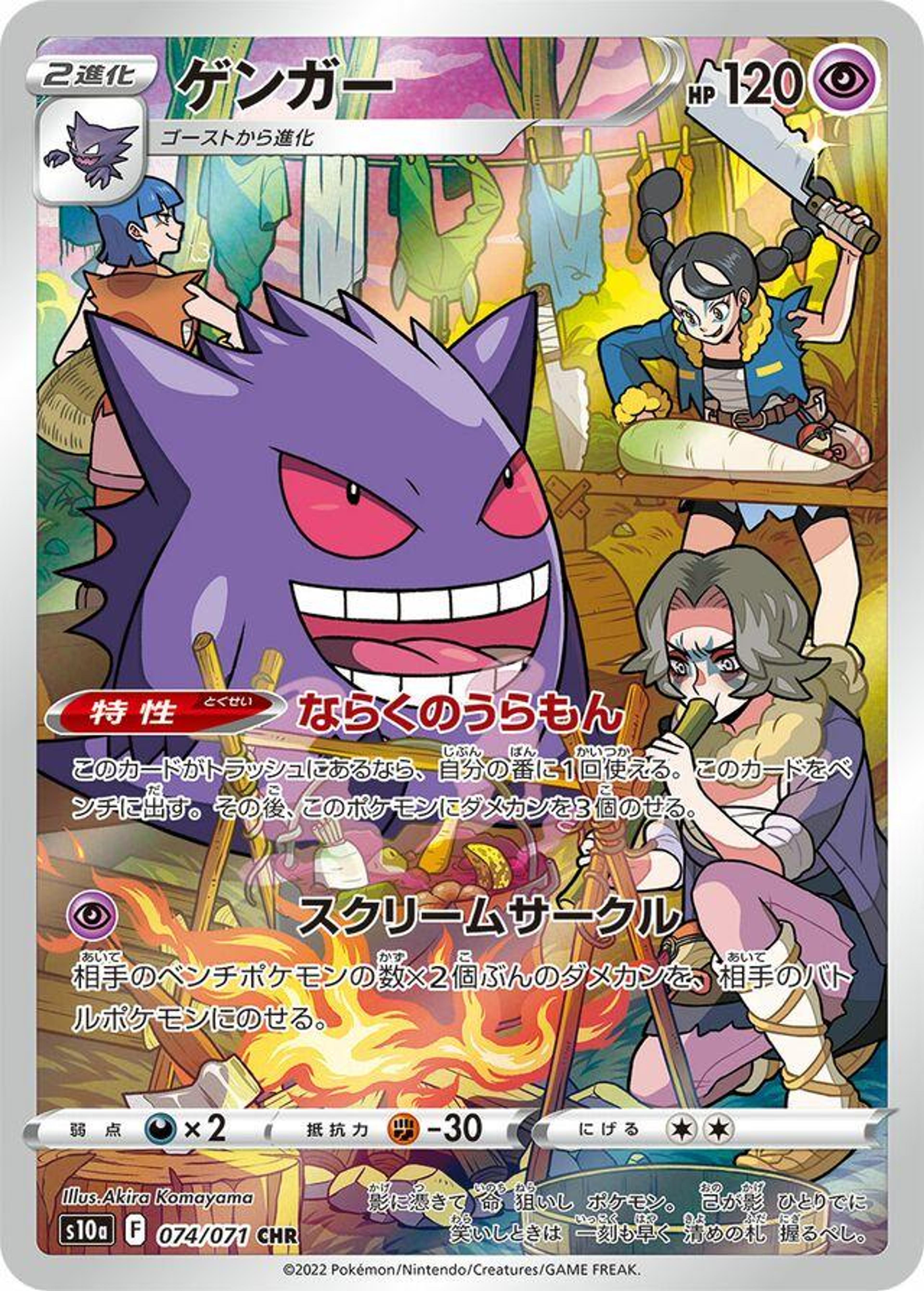
Akira Komayama put Gengar in a room with two people who have not noticed him yet. The card game spent years drawing Gengar as a monster. This one draws him as a presence, which is scarier.
9. Gengar, Masaki promo
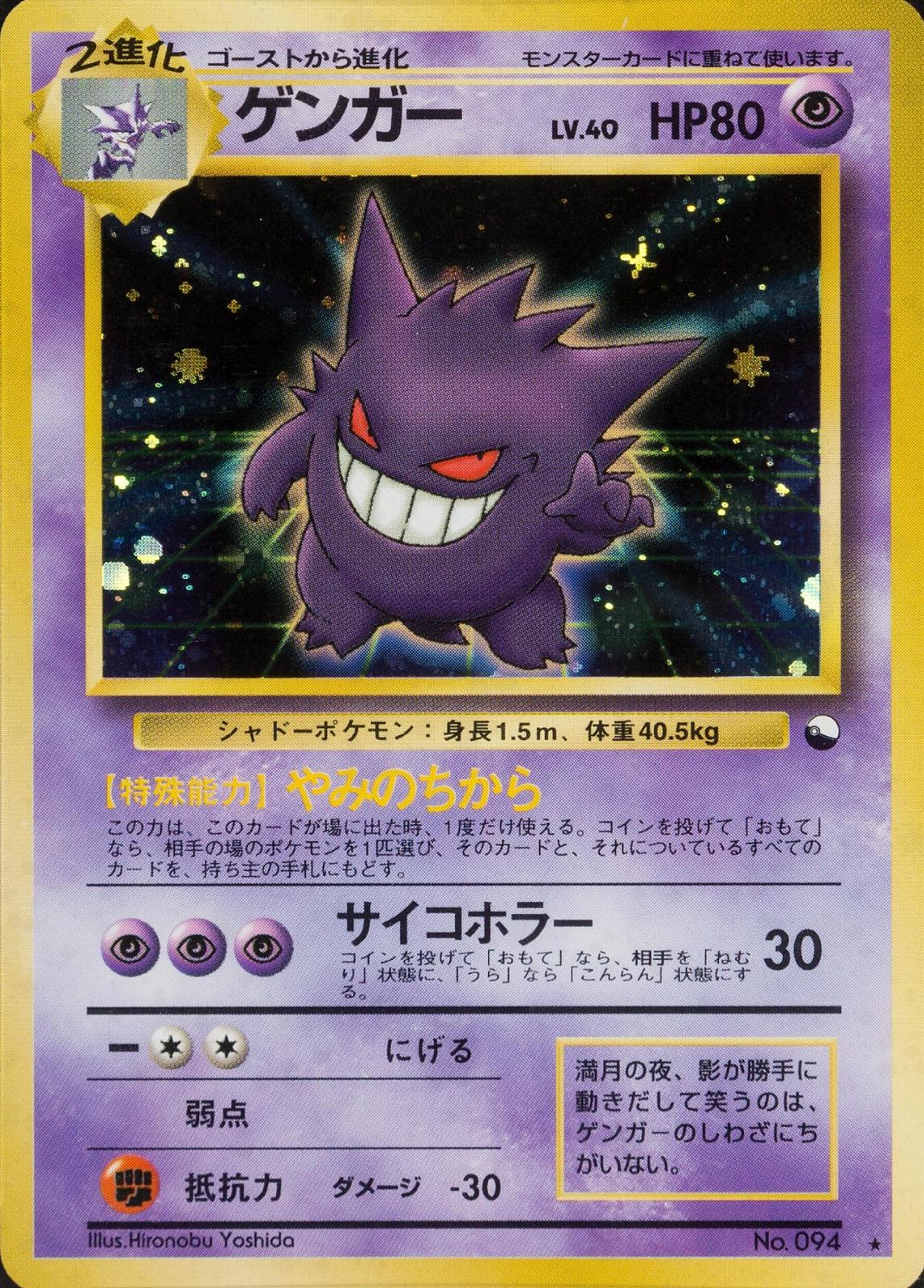
A Japanese mail-away promo from the earliest years of the game, illustrated by Hironobu Yoshida. Cards like this were never sold in packs, which is most of why they are hard to find in any condition at all.
8. Gengar, Legendary Collection reverse holo
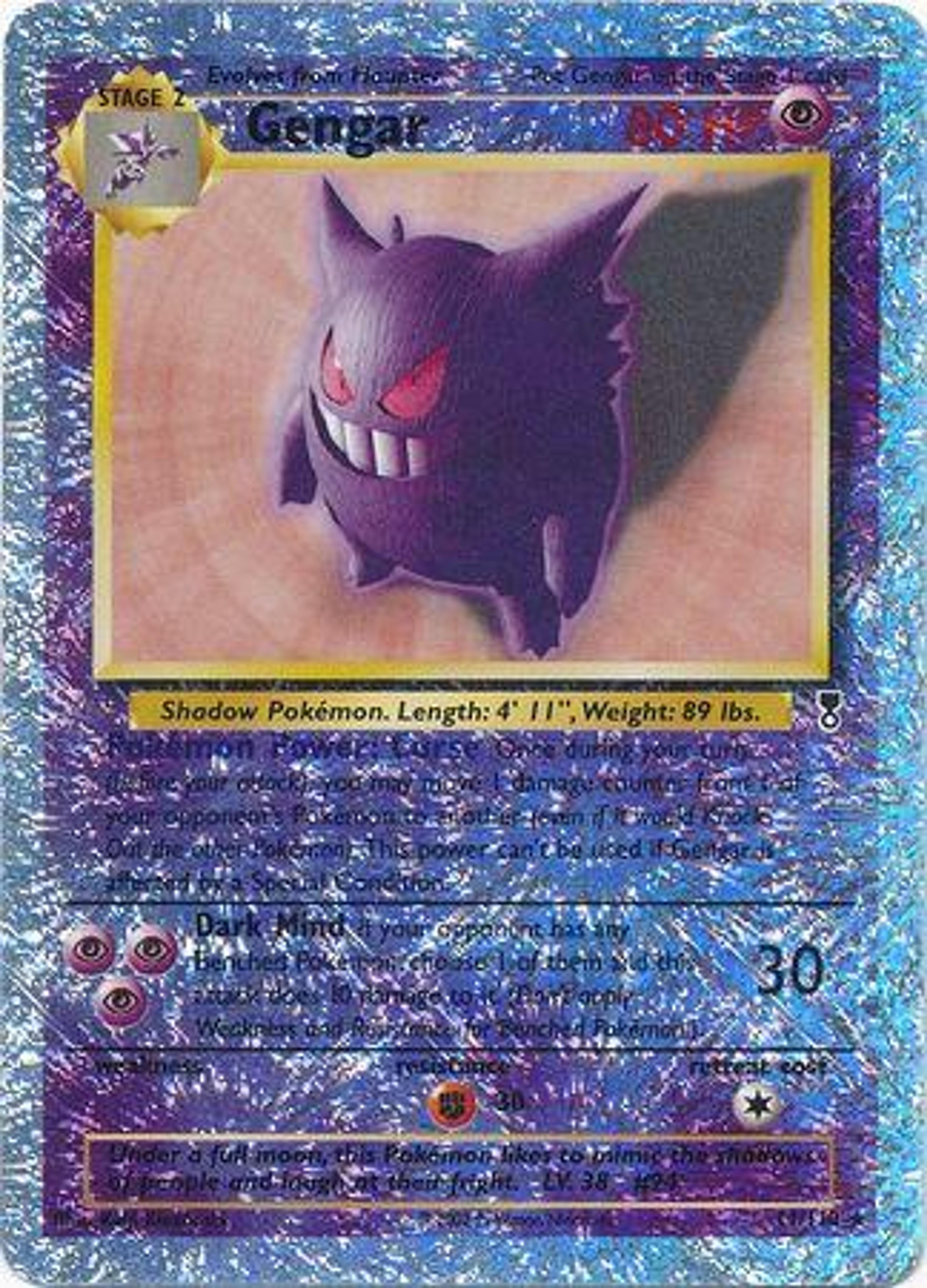
Legendary Collection reverse holos put the foil pattern over the entire card, text box included. It looked like a printing error at the time. Collectors spent the next twenty years deciding it was a masterpiece.
7. Gengar EX, full art
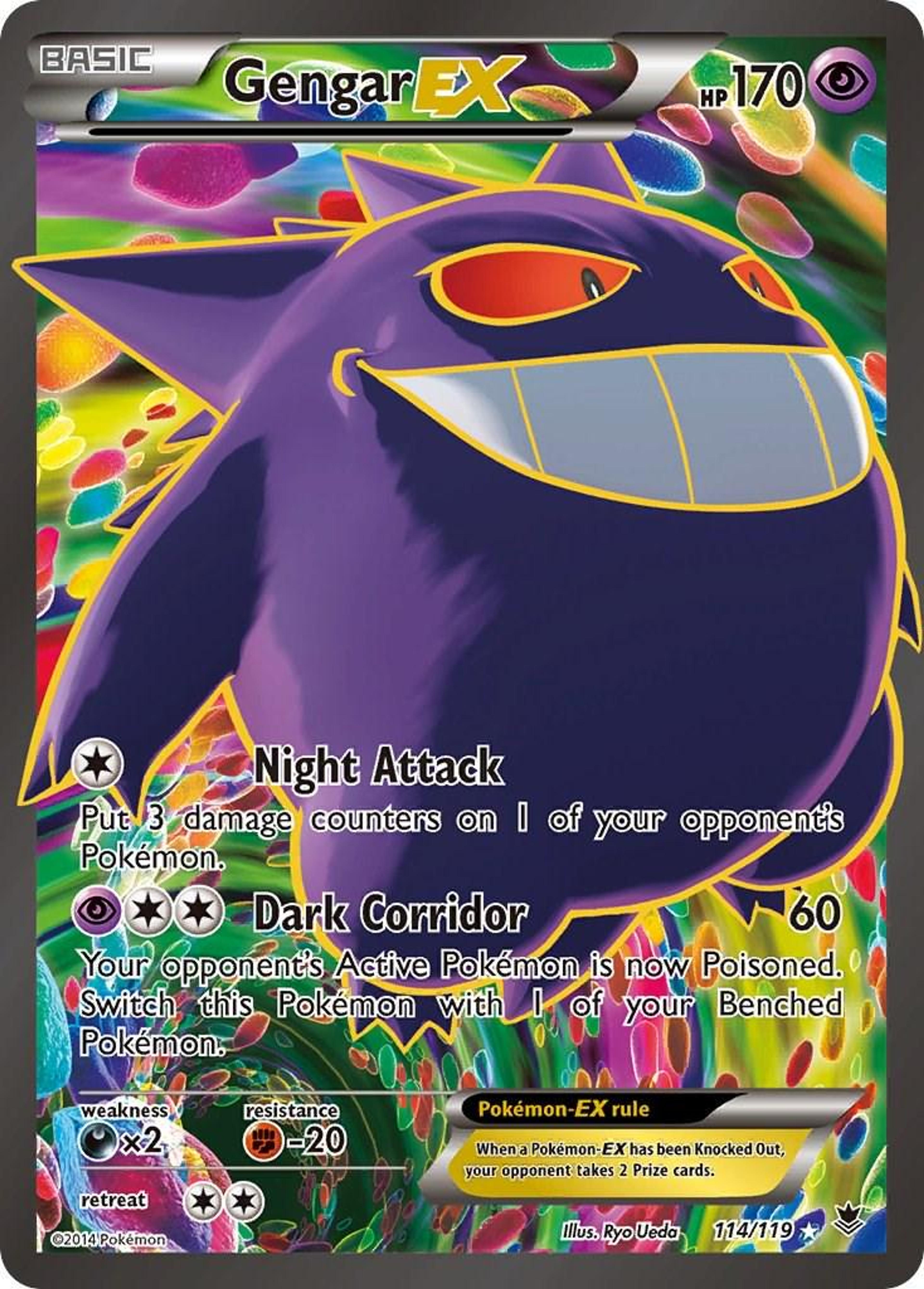
Full art treatments removed the little window that held card art for a decade, and this Gengar was one of the first to make the whole card the picture.
6. Mega Gengar EX, XY promo
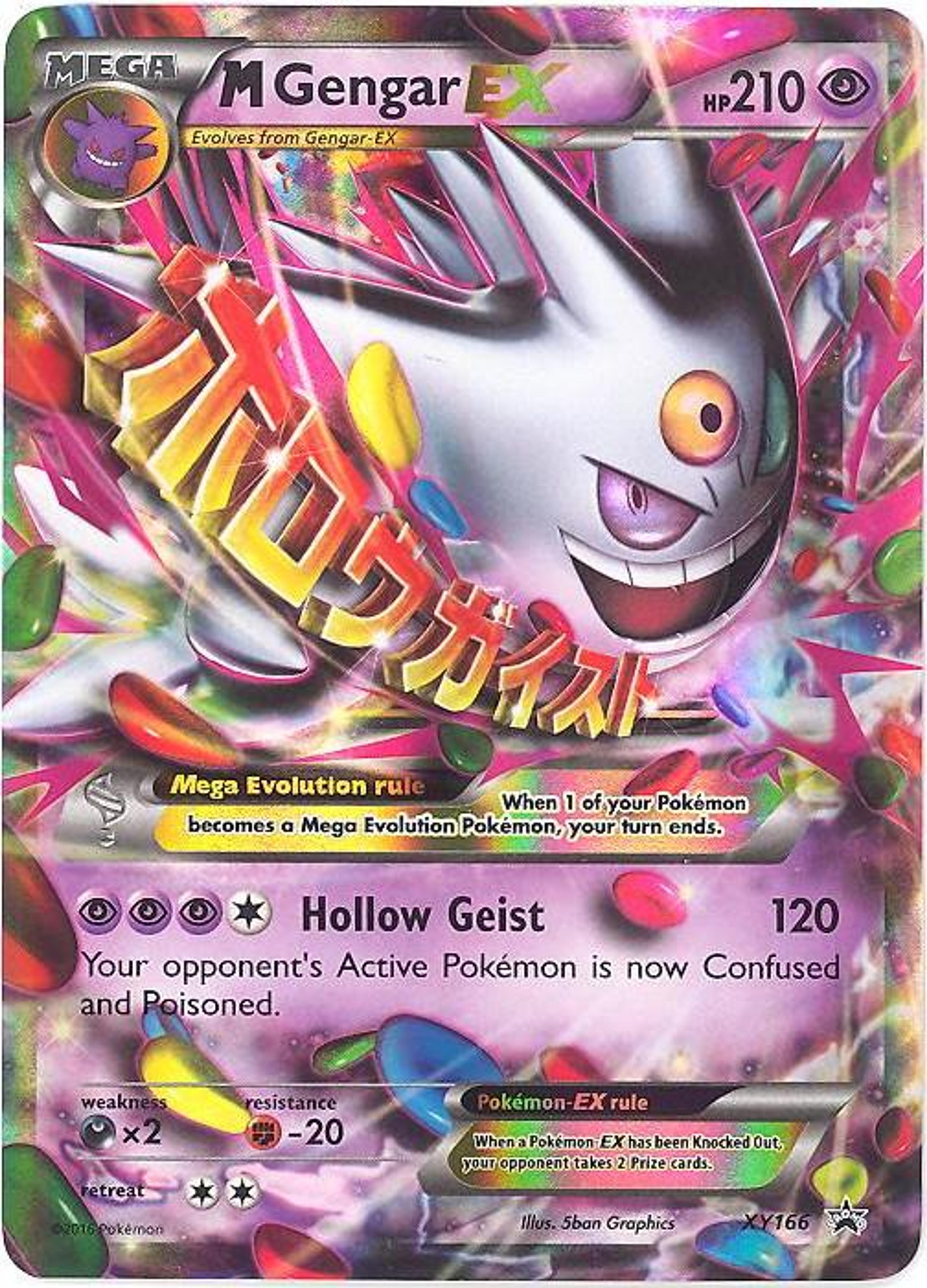
The XY-era version of an idea that number five would repeat a decade later. Worth reading the two together to see how little the formula changed and how much the printing did.
5. Mega Gengar ex, 2026
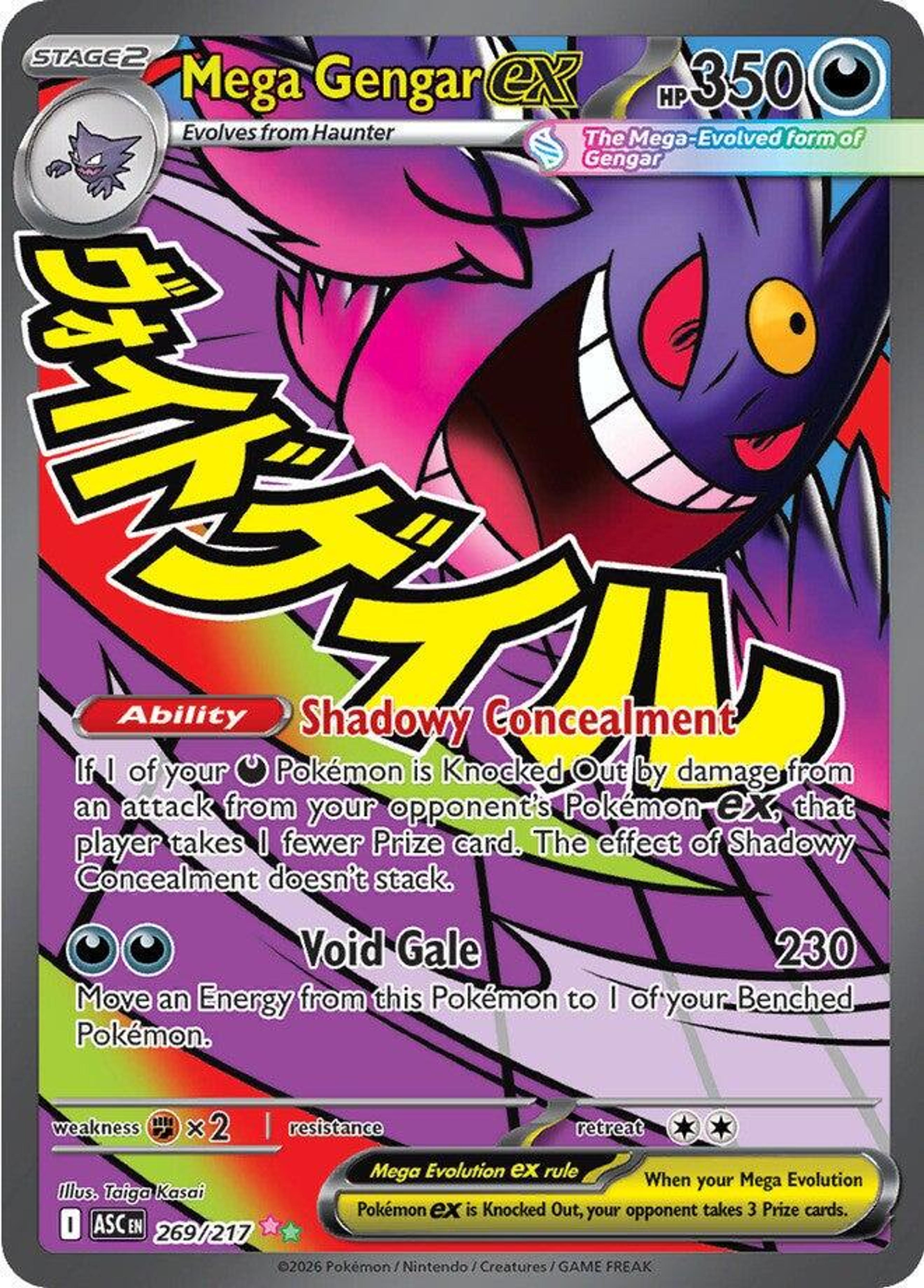
The newest card here, and the loudest. Katakana across the middle of the frame, Mega Gengar grinning behind it, colour pushed as far as the printing allows.
Modern cards compete for attention on a phone screen before they compete for anything else, and this one is designed for exactly that fight.
4. Gengar VMAX
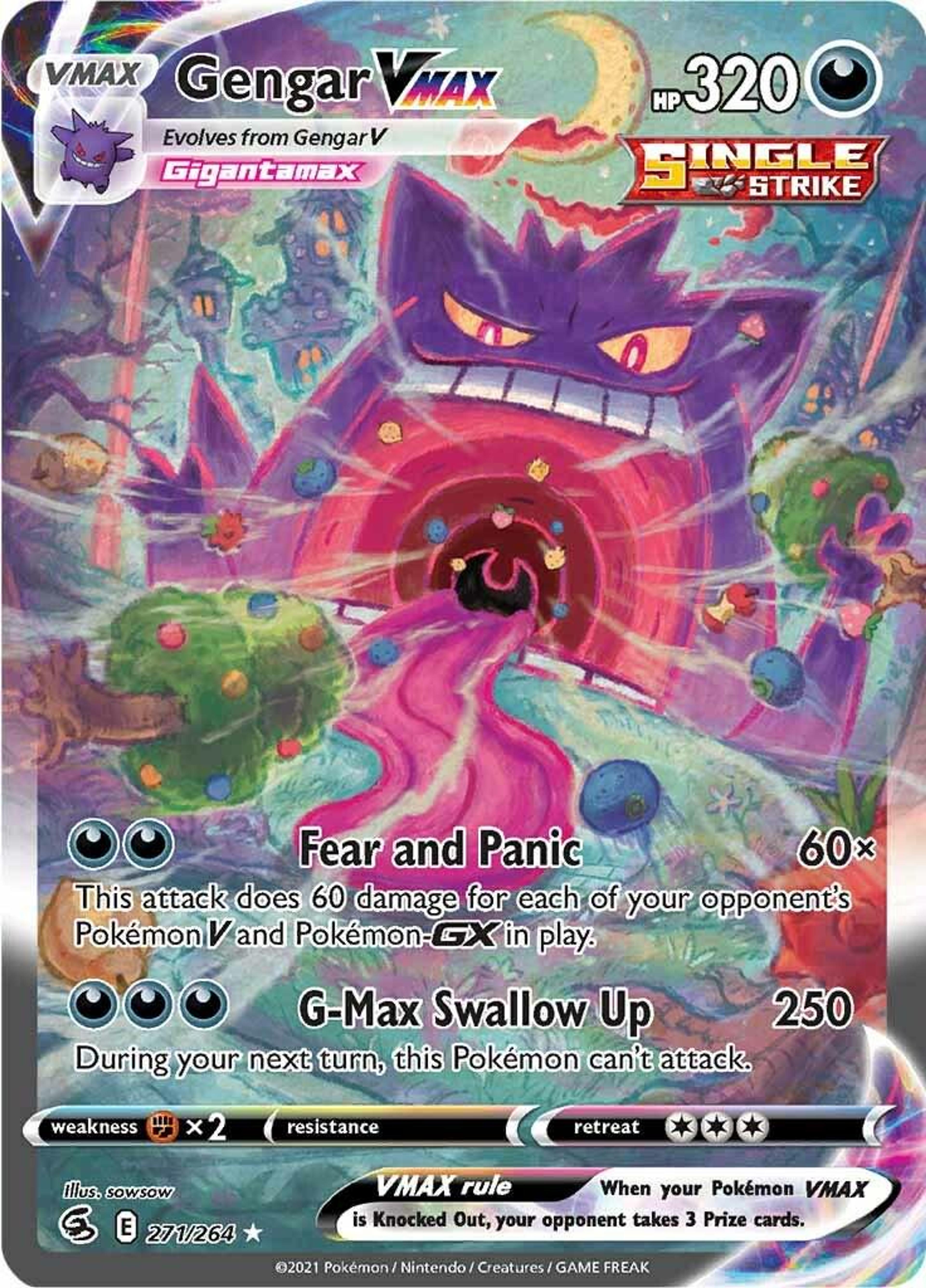
sowsow put a Gigantamax Gengar behind a pastel storybook landscape and dropped a swirling pink void into the middle of the road. The sweetness is what makes it frightening.
It is also on our list of the most amazing Pokémon cards ever printed, which is the only card to appear on both.
3. Gengar, Skyridge H9
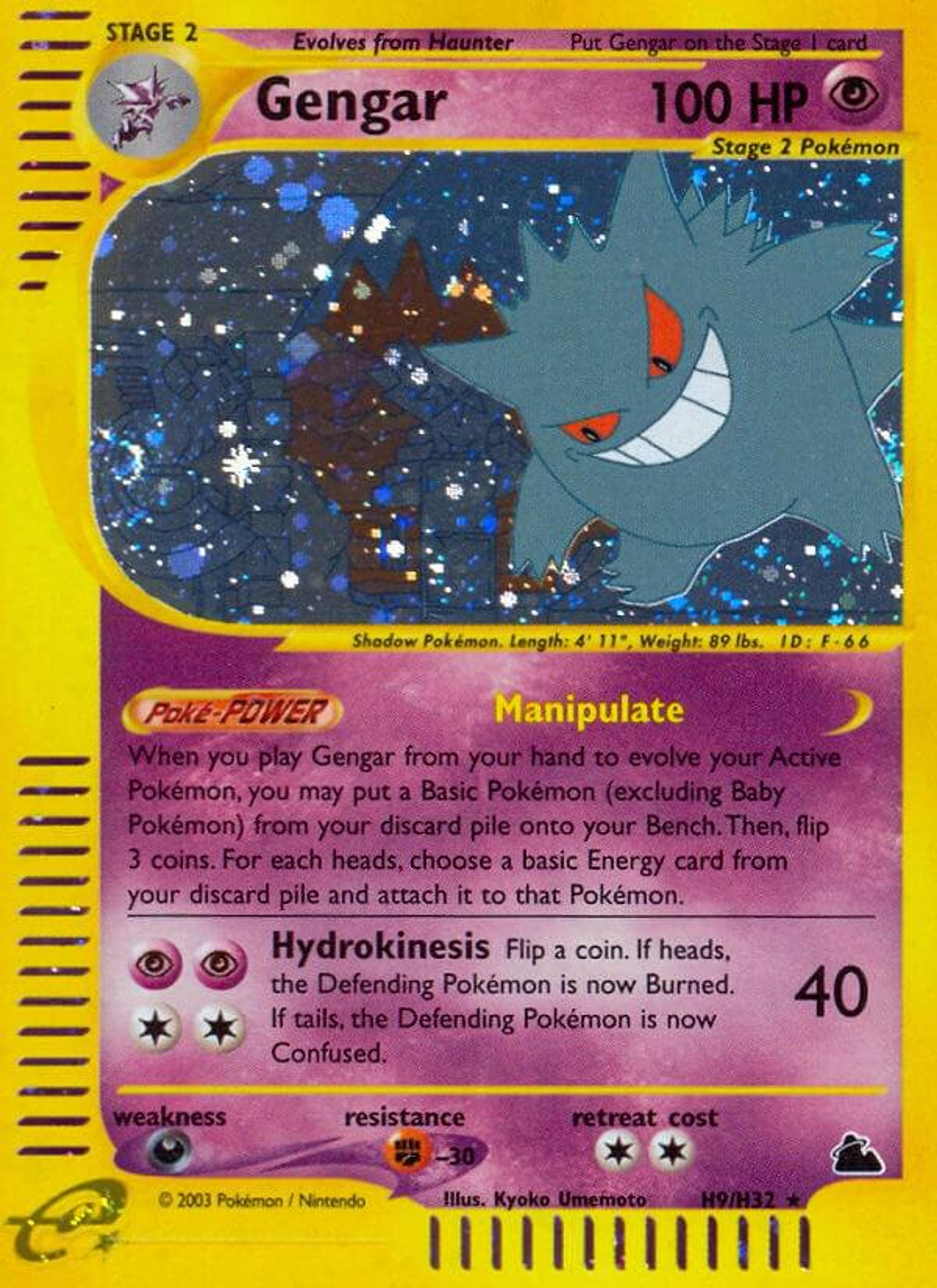
Ryota Umemura drew a Gengar that looks sketched rather than rendered, lit blue under a crescent moon. It is the least polished card on this list and one of the most atmospheric.
Skyridge closed the original era of the game. This card feels like it knows that.
2. Gengar ex, FireRed and LeafGreen
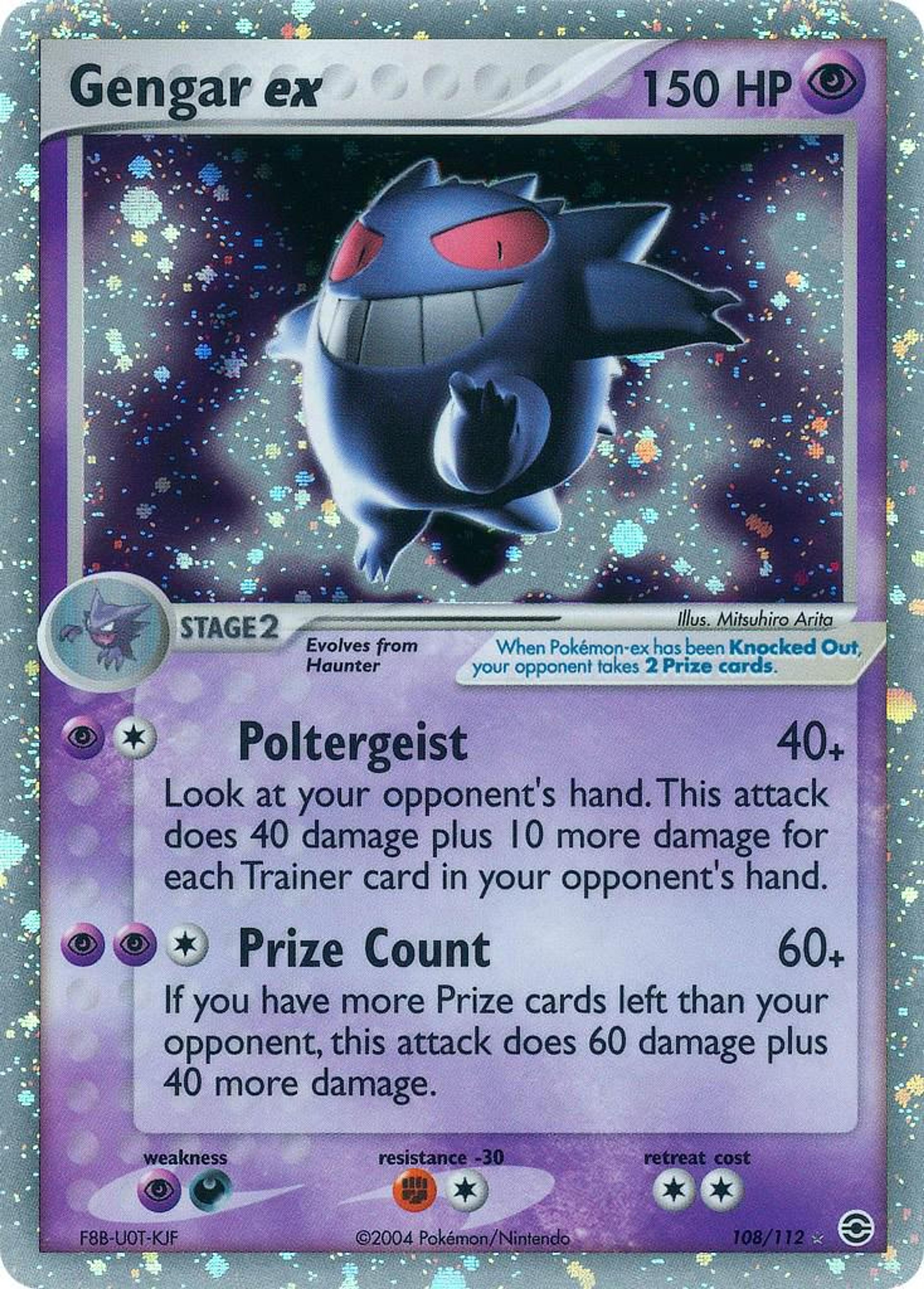
Illustrated by Mitsuhiro Arita, the same artist behind the Base Set Charizard. Gengar hangs in a purple starfield with his arms out, and the whole card is built on that one gesture.
Its attack is called Poltergeist, which reads your opponent's hand. Nobody has improved on that pairing of art and mechanic since.
1. Sabrina's Gengar
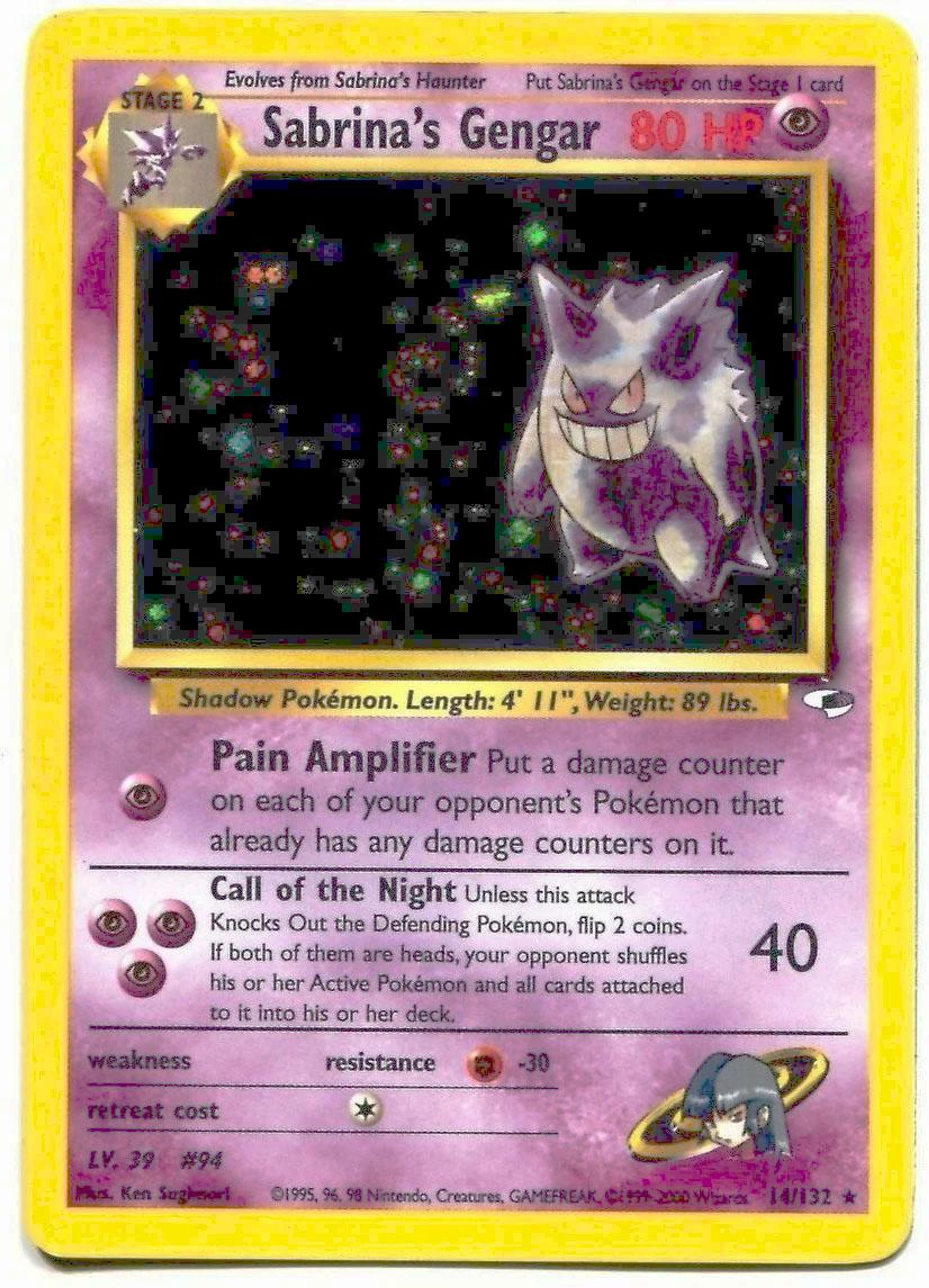
Ken Sugimori drew this one, which matters: he designed the creature in the first place. The art sits in a small window on a plain frame, the way every card did back then, and it still reads better than most cards ten times its size.
The Gym era gave Pokémon to their trainers, and Sabrina's Gengar is the clearest argument for why that idea worked. A card with a name on it feels like it belongs to someone.
What a single-Pokémon collection teaches you
Chasing one Pokémon across thirty years is the fastest way to learn how the hobby actually works. You pick up eras, illustrators, print treatments and regional exclusives without ever studying them, because you keep bumping into the same names.
It also gets expensive in a way that creeps. Ten cards across ten eras means ten different markets, and no two of them move together.
If you want the side of collecting where the value is in the numbers rather than the picture, read why five ordinary-looking cards still hide serious PSA 10 upside.
Stakd was built for the part nobody enjoys: knowing what the whole line is worth, in one place, without checking ten tabs.
Track what your collection is really worth
Stakd turns your cards, Funko Pops and LEGO sets into a valued portfolio, with AI grading, live market prices and profit tracking.
Download StakdKeep reading
Card art & culture
The 15 Goofiest Pokémon Cards of All Time
Fifteen cards that gave up on looking powerful. The same artist keeps appearing, and so do the same three Pokémon families.
· 4 min read
Card art & culture
The 10 Ugliest Charizard Cards of All Time
Charizard sells whatever is printed on it, which is exactly why some of the art is this bad. Ten misses, and the house decisions behind them.
· 3 min read
Card art & culture
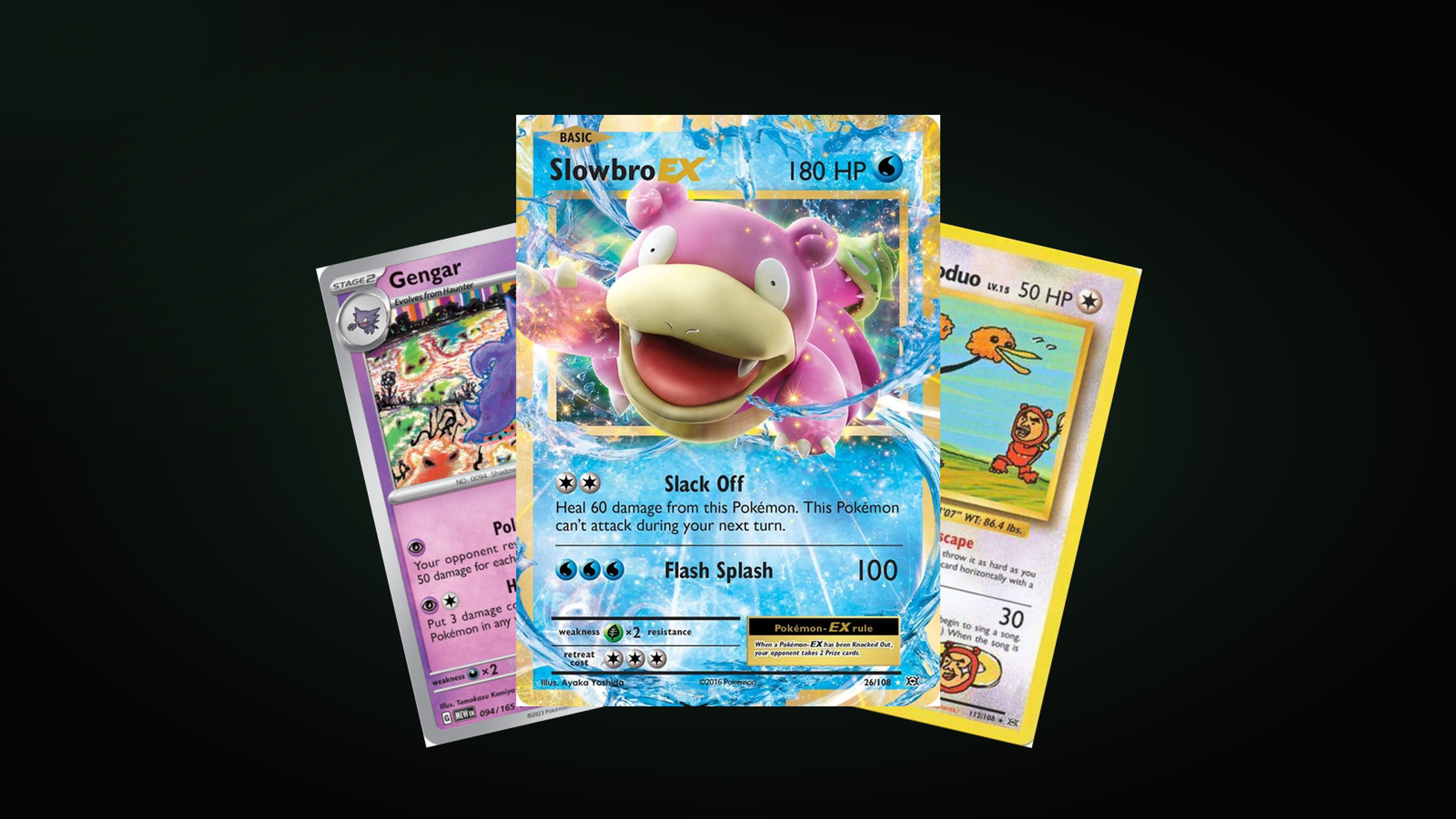
The Most Amazing Pokémon Cards of All Time
Magikarp 203/193, Ancient Mew, a Charizard mid-fight: the cards that earned a place beyond their own set, and what each one proves about card art.
· 5 min read