5 Pokémon Cards Still Hiding Huge PSA 10 Upside
Five cards, five different reasons a slab is worth more than the raw copy, and the arithmetic that tells you when grading is actually worth it.
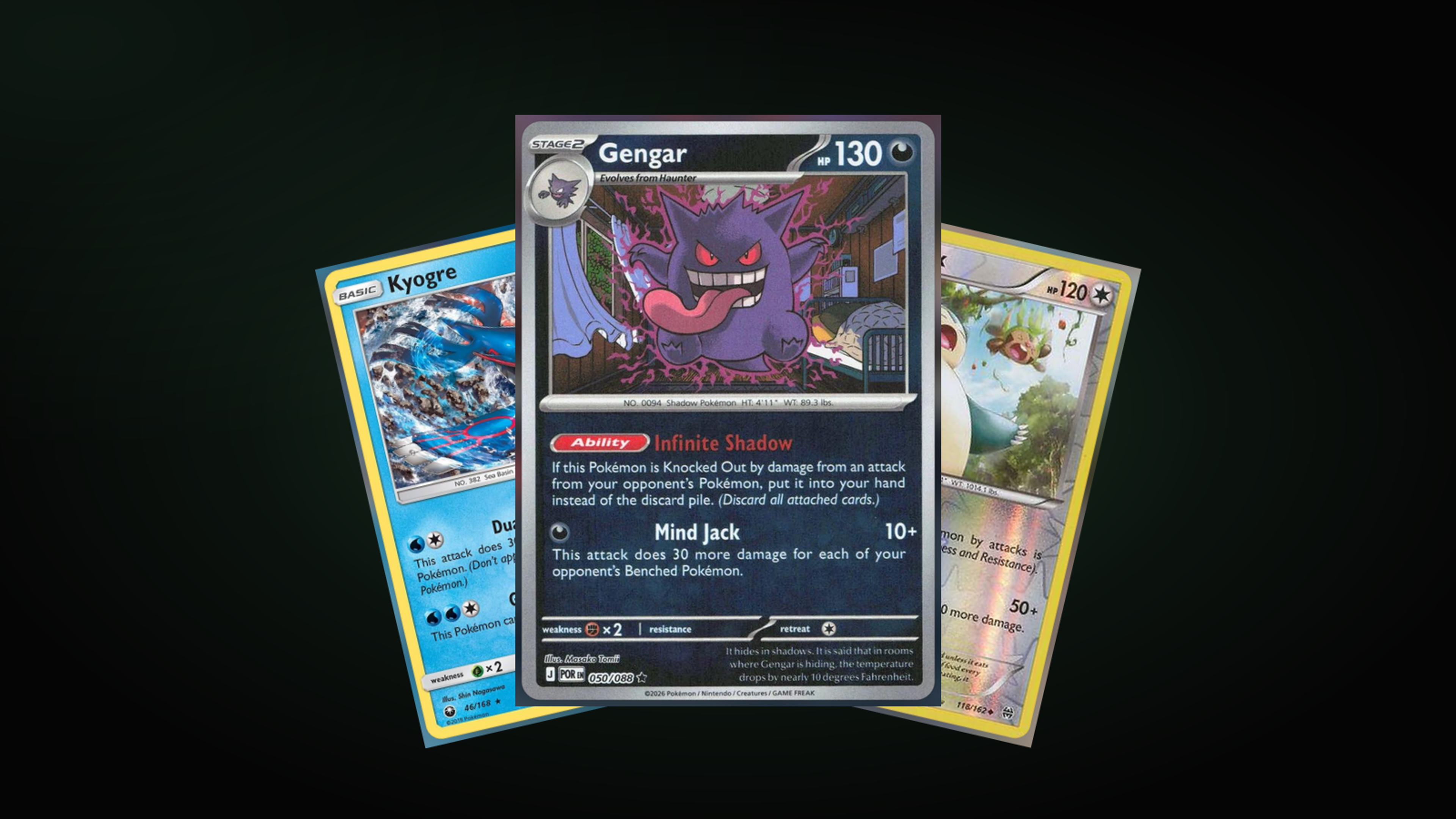
Every collection has a few cards sitting raw in a binder that would be worth noticeably more in a slab. The hard part is telling those apart from the ones where grading just costs you money.
These five come from a carousel that struck a nerve. What makes them interesting is not that they share a price bracket (they don't), but that each one hides its upside for a different reason. Learn the five patterns and you stop needing anyone's list.
What "PSA 10 upside" actually means
Upside is not the PSA 10 price. It is what is left after reality takes its cut:
The PSA 10 sold price, minus what a raw copy costs you, minus grading and shipping both ways, and then multiplied by your honest odds of actually getting a 10. A card that triples in a slab is a bad bet if only one submission in ten comes back a 10.
That last term is the one carousels leave out, and it is the one that decides whether you make money.
Nothing here is a buy signal
This article explains mechanisms, not recommendations. Card values move constantly, and no figure quoted from memory is worth acting on. Pull the current numbers yourself before spending anything. The method is at the bottom of this article.
5. Gengar, the modern card that breaks the rule
Gengar 050/088, from Mega Evolution: Perfect Order in 2026, illustrated by Masako Tomii. A reverse holo, and recent enough that the ink is barely dry.
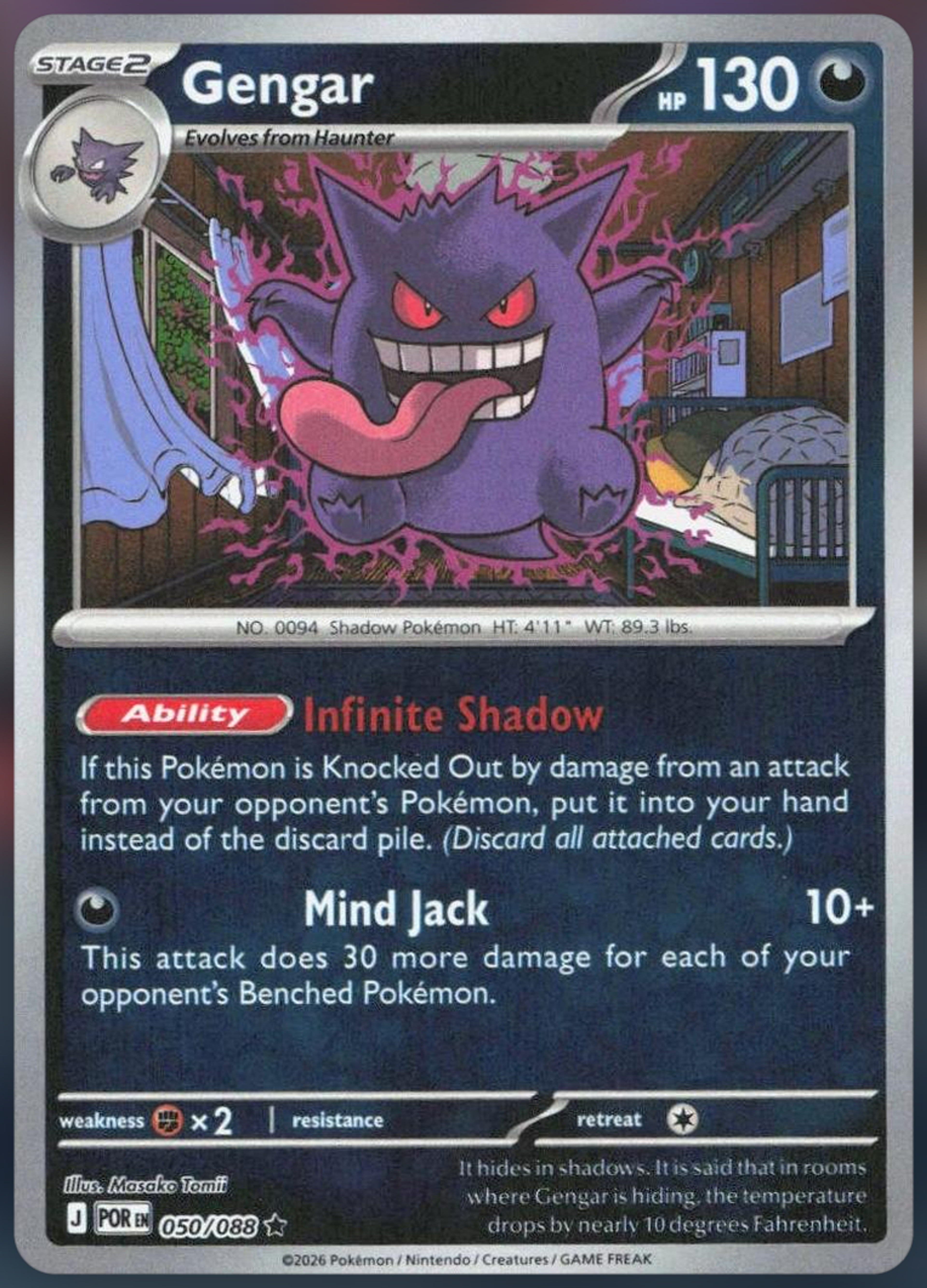
Start with the one that breaks the rule the other four follow. Modern print runs are enormous and modern card stock is good, so PSA 10s are not scarce and will not become scarce. The population will be large. On the numbers, it looks like the opposite of an upside play.
Except the upside on a modern card was never scarcity. It is the illustration. Look at what Tomii actually drew: Gengar is not posed against a background, it is in a child's bedroom at night, filling the doorway, while someone sleeps. It is a scene, and it is genuinely unsettling.
Cards people want to look at outlive cards people wanted to own, which is the same thing we argued in our piece on the best Pokémon card art. Gengar is also a permanent top-tier fan favourite, which is the same demand floor that puts Snorlax at number three, applied to a brand-new card.
4. Kyogre, the legendary that never got its moment
Kyogre 46/168, Sun & Moon: Celestial Storm, 2018, illustrated by Shin Nagasawa.
Box-art legendaries carry demand from people who never played the card game at all: they know the Pokémon from the video games. But a legendary printed as a regular holo, in a large set, in a year nobody talks about, gets none of the attention that goes to chase cards.
That combination (durable name recognition, forgettable printing) is where quiet upside lives. Nobody sets aside pristine copies of a card nobody is talking about.
3. Snorlax, the reverse holo nobody submits
Snorlax 118/162, from XY BREAKthrough in 2015, illustrated by Kouki Saitou. It is a reverse holo, which matters more than it sounds.
Reverse holos get graded far less often than the holo rare from the same set. Less attention means a thinner PSA 10 population for a card that is otherwise unremarkable, and the foil pattern across the whole card face is one more surface to scratch.
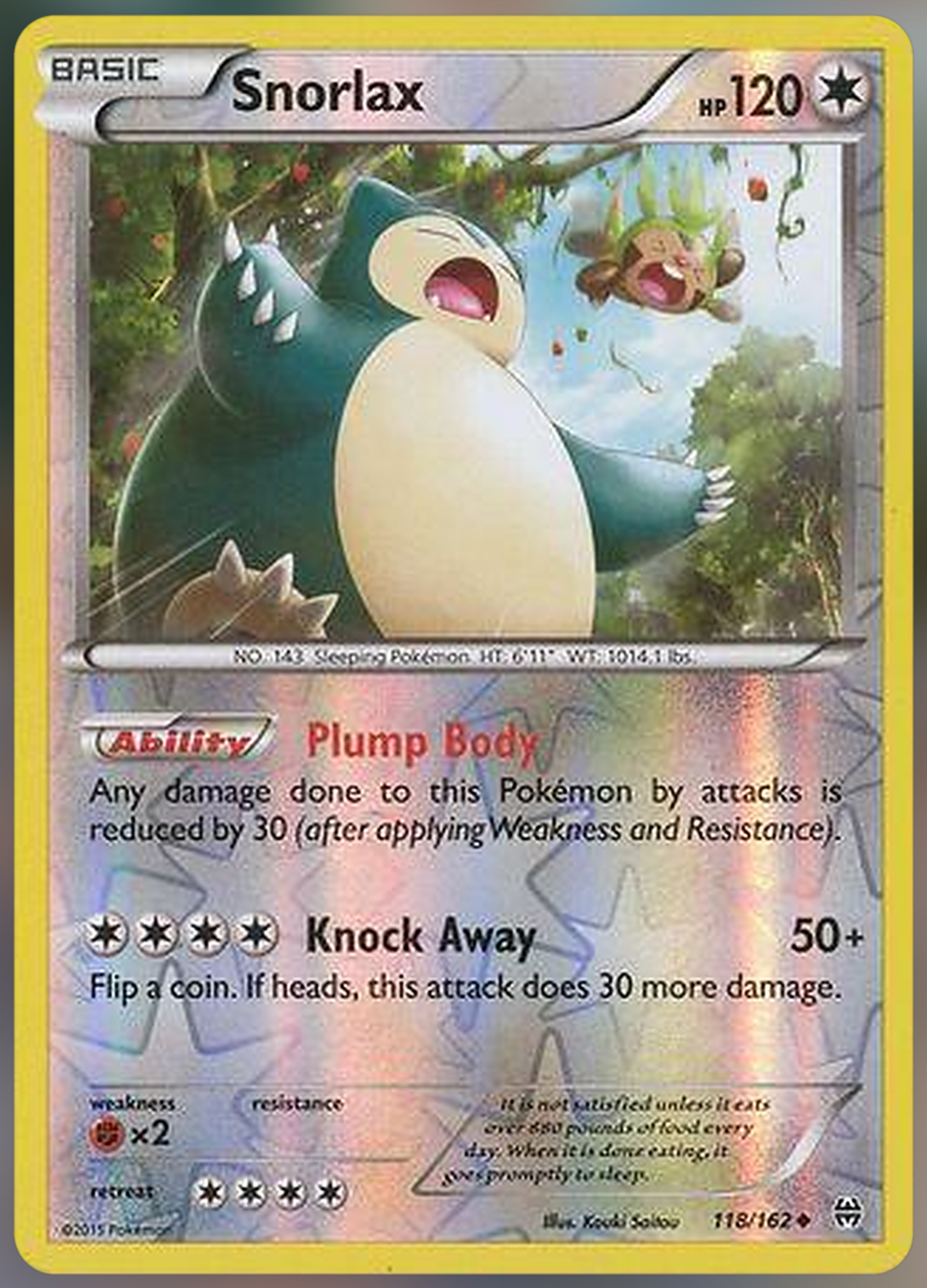
Snorlax belongs to a small group of Pokémon that never go quiet. There is always someone building a Snorlax binder, which puts a floor under demand that has nothing to do with competitive play, set rotation or what is hot this year.
The pattern to recognise: a mainstream-popular Pokémon, in a set old enough that raw copies have been circulating for a decade. Circulation is what thins the pool of gradeable copies over time, quietly, while nobody is watching.
1 & 2. Zekrom and Reshiram, the pair problem
Zekrom 47/114 and Reshiram 26/114. Same set, same year, same illustrator (5ban Graphics), same 130 HP, same opening attack. They were designed as a matched pair (Deep Black and Vast White), and they were printed as one.
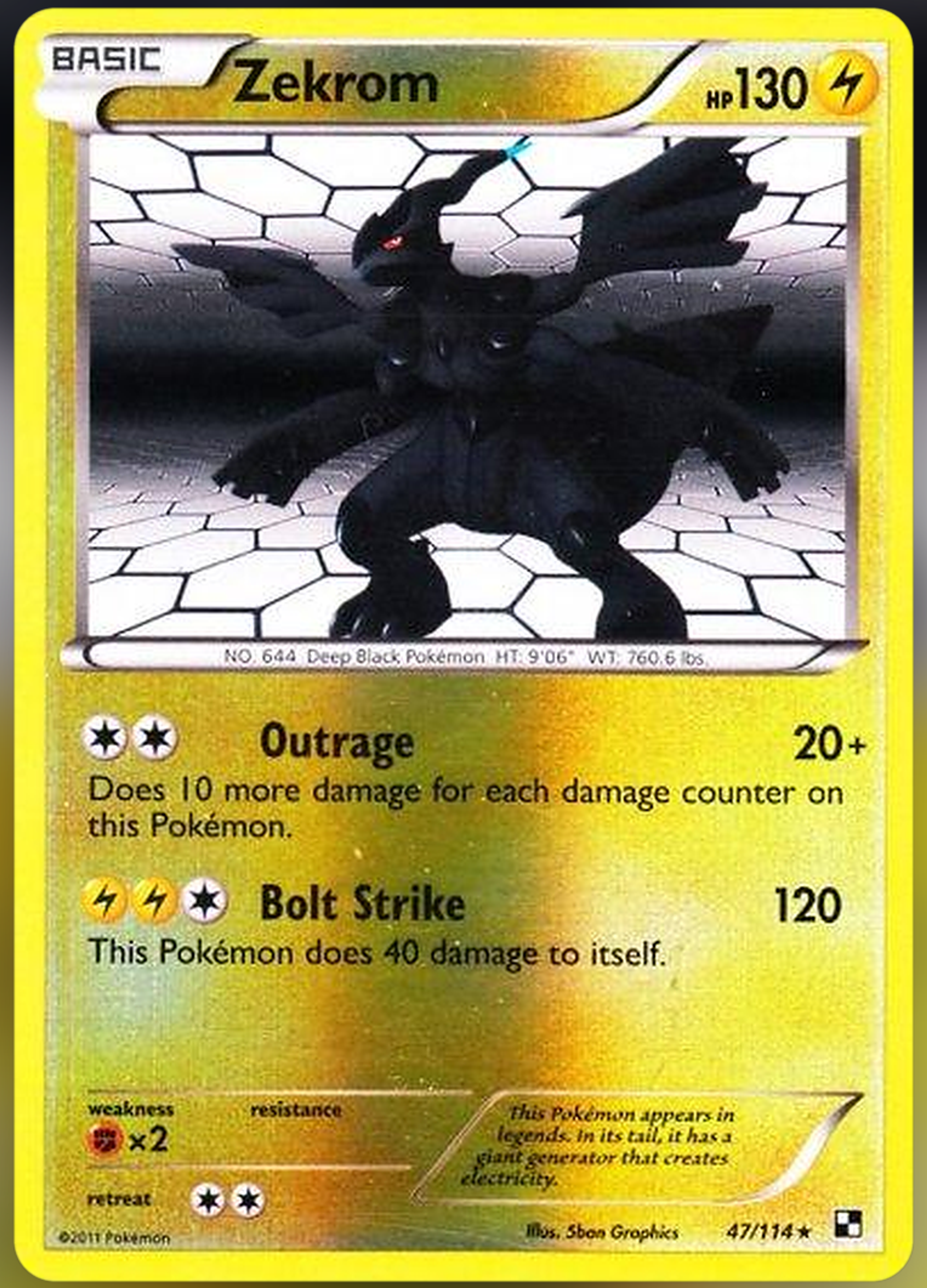
That is the mechanism. Collectors who want one want both, so demand on the pair is structurally higher than demand on either card alone, and a matched set in matching grades is much harder to assemble than two unrelated cards, because you need two 10s, not one.
Both were also competitive staples in their era, which is the other half of it: cards that saw play spent their lives in sleeves, decks and hands, and most surviving copies show it.
What the two scans actually show
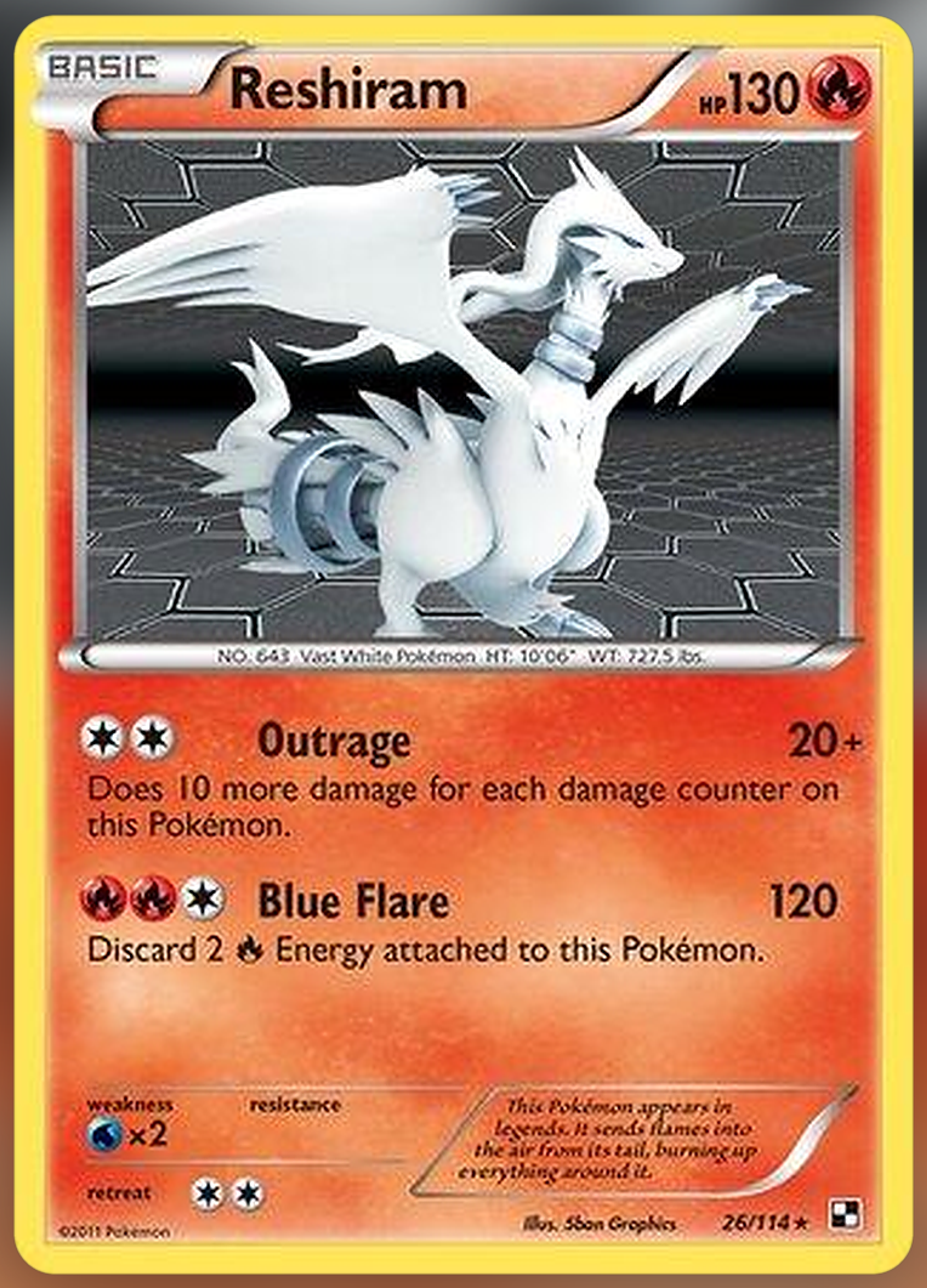
Both carry the yellow border every Black & White card carries, so neither has the edge-whitening problem that black-bordered cards are famous for. Where they differ is inside the frame: Zekrom is a black dragon on a dark hexagonal field, Reshiram a white one on grey. Dark artwork hides surface scratches that pale artwork puts on display, which is worth a second look under a light before you decide which copy to send.
“Designed as opposites, printed together, and wanted together. Two 10s is more than twice as hard as one.”
How to check any of this yourself
Four numbers, in this order, and none of them from a memory or a video:
First, the PSA population report for that exact card and set. How many 10s exist, and what share of submissions got one. Second, recent PSA 10 sold prices, sold and not asking, over the last few months. Third, what a raw near-mint copy actually costs right now. Fourth, grading plus shipping both ways, at today's service level.
Then do the subtraction, and weight it by that share of submissions that came back 10. If the answer is thin, the answer is no.
Do it before you buy, not after
The submission cost is sunk the moment you send the card. The maths only protects you if you run it while you can still change your mind.
The rest of what we publish on grading economics and what moves card values lives here.
The part that does not fit in a carousel
Grading is a bet placed on your own eyes. You are wagering the fee that a card you judged flawless will survive someone else's loupe, and the failure mode is not dramatic, it is a 9 that leaves you slightly worse off than before.
Do that ten times without tracking what you paid, what came back and what it is worth now, and you genuinely will not know whether you are ahead. Most collectors don't. That is the honest reason to track a collection properly, and it has nothing to do with anyone's list of five cards.
Track what your collection is really worth
Stakd turns your cards, Funko Pops and LEGO sets into a valued portfolio, with AI grading, live market prices and profit tracking.
Download Stakd